

Goodbye Saptaparni, Hello Cardigans: Why the Last Week of October is Delhi’s Most Fleeting Luxury
There is a viral sentiment currently echoing across social media platforms like X (formerly Twitter) that perfectly encapsulates the collective psychology of the National Capital Region: “Delhi people will complain about this city 11 months a year & then October arrives, and suddenly we’re walking under fragrant Saptaparni trees, eating momos and hopping pandals.
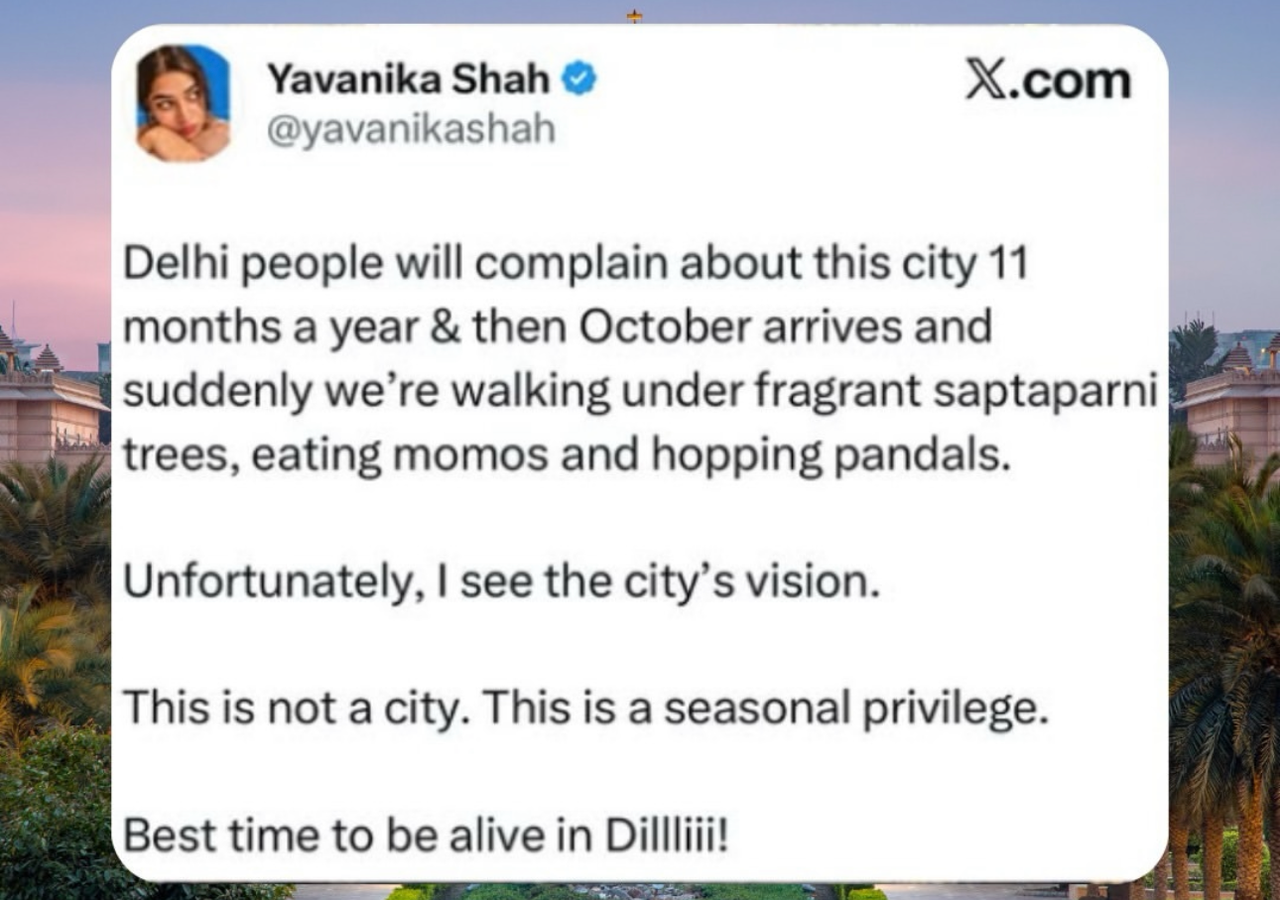
For exactly 15 to 20 days a year, Delhi and Gurugram transform into an absolute utopia. The oppressive, skin-melting heat of the summer is a distant memory, and the bone-chilling, smog-heavy depths of January have not yet arrived. However, as the final days of October slip away, so does this brief, perfect window. The Diwali lights are being boxed up, the festive adrenaline is crashing, and the city is bracing for its most intense phase: the NCR winter.
Before we fully surrender to the months of heavy thermal wear and indoor isolation, it is time to dissect why this specific transitional week is the city’s ultimate, yet most fleeting, luxury.
The October vs. November Shift: A Cultural Snapshot
The transition from late October to early November is not just a meteorological event; it is a complete lifestyle overhaul for every household in the capital. Here is a breakdown of the immediate shift residents experience:
| The NCR Lifestyle Metric | Late October (The Seasonal Privilege) | November (The Winter Reality) |
| The Evening Air | Crisp, breezy, and slightly romantic. | Heavy, stagnant, and reliant on air purifiers. |
| The Signature Scent | The intoxicating fragrance of blooming Saptaparni. | The unmistakable, smoky scent of winter haze. |
| Wardrobe Choices | Aesthetic light cardigans and denim jackets. | Heavy hoodies, padded jackets, and thermals. |
| Weekend Socializing | Hopping outdoor Diwali melas and open-air cafes. | Rushing indoors by 8:00 PM to escape the chill. |
| Household Appliance Status | Ceiling fan on speed 2; AC finally switched off. | Geysers running continuously; heavy razais (quilts) out. |
The Fading Fragrance of the Saptaparni
If Delhi’s October had an official brand ambassador, it would be the Alstonia scholaris, commonly known as the Saptaparni tree. Planted extensively along the avenues of Lutyens’ Delhi, the institutional sectors of Noida, and the residential blocks of Gurugram, this evergreen tree blooms with tiny greenish-white flowers for a hyper-specific window in late autumn.
The heady, almost overwhelming fragrance of the Saptaparni is the biological trigger that tells Delhiites the festive season has arrived. It is the scent that accompanies late-night drives for ice cream at India Gate or evening strolls through neighborhood parks. However, as October concludes, the blooms begin to drop. The fading of the Saptaparni scent is the first undeniable warning sign that the romantic phase of autumn is over, and the harsh realities of winter are setting in.
The Great Wardrobe Migration: Hello Cardigans
The final week of October triggers a massive logistical operation in households across the NCR: the great wardrobe migration. The brief era of wearing light, aesthetic layers—a thin cardigan thrown over a t-shirt, or a stylish denim jacket—is rapidly coming to a close.
This is the exact week when the household debates peak. Families argue over whether it is time to pull the heavy razais (quilts) down from the top shelves of the almirah. The ceiling fan, which was recently downgraded from a frantic speed 5 to a gentle speed 2, is suddenly turned off completely in the early hours of the morning. Furthermore, the culinary palate of the city shifts overnight; the demand for iced lattes drops, replaced entirely by the cultural necessity of finding the perfect roadside kulhad chai to combat the evening chill. If you are looking to squeeze in one last outdoor coffee date before the deep freeze, browse our curated list of the Best Hidden Aesthetic Cafes in Delhi & Gurugram.
The Impending Haze: A Necessary Reality Check
While it is easy to romanticize the changing leaves and the cozy sweaters, the shift into November brings a shared, gritty reality for NCR residents. The slight morning mist that felt cinematic in October inevitably thickens into the infamous November smog.
As the temperature drops, atmospheric inversion traps pollutants closer to the ground. Soon, checking the Central Pollution Control Board (CPCB) Air Quality Index app becomes a more frequent morning ritual than checking the news. The evening walks are quietly traded for the hum of indoor HEPA air purifiers running on maximum capacity. The “seasonal privilege” abruptly expires, demanding resilience and adaptation from the city’s residents.
