
The Grand Handloom Fair 2026 (Nov 14–23): Insider Guide to Free Entry, Weaves & Survival Tips
The Grand Handloom Fair returns from November 14 to November 23, 2026, bringing over 150 master weavers, GI-tagged textiles, and direct-from-loom apparel under one roof—with zero entry fees. Timed right at the peak of Delhi-NCR’s winter wedding and festive shopping season, this ten-day textile showcase cuts out luxury boutique markups and connects buyers directly with artisan cooperatives from 20+ Indian states.
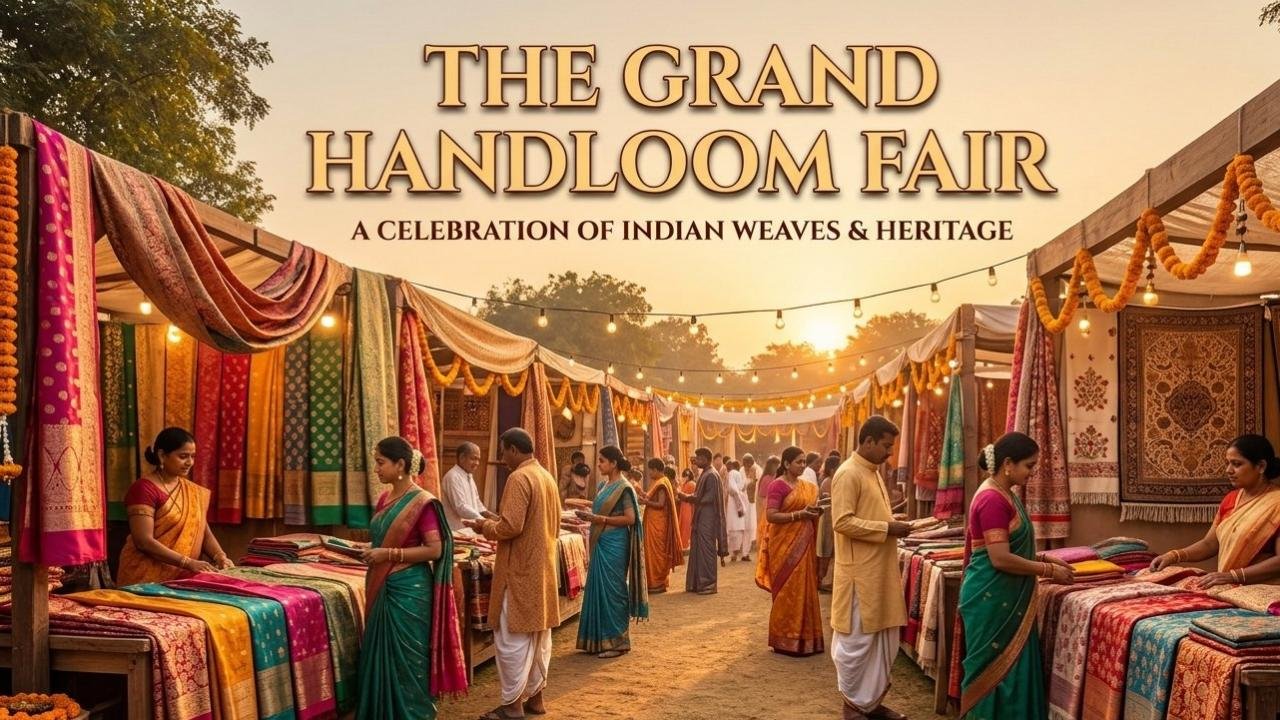
Direct-from-loom textiles at The Grand Handloom Fair. Source: New Delhi Wants
Quick Event Overview: Dates, Timings & Entry Rules
Before planning your route across NCR traffic, lock in the core logistics. Unlike ticketed trade expos running simultaneously in the capital—such as those covered in our IITF Pragati Maidan tickets guide—The Grand Handloom Fair keeps its gates open to the general public without an admission barrier.
| Event Parameter | Official Details & Insider Notes |
|---|---|
| Event Name | The Grand Handloom Fair (Winter Wedding & Festive Edition) |
| Dates | Saturday, November 14 – Monday, November 23, 2026 (10 Days) |
| Daily Timings | 11:00 AM to 8:30 PM (Last entry around 8:00 PM) |
| Entry Fee / Tickets | Free Entry (No paid tickets; spot registration at the gate) |
| Primary Venue Hub | Central Delhi Exhibition Grounds (Dilli Haat INA / Handloom Haat Janpath & Partner Pavilions—confirm specific hall signage at Gate 1) |
| Key Categories | Banarasi Silk, Kanjeevaram, Chanderi, Maheshwari, Pashmina, Pochampally Ikat, Phulkari, Bhagalpuri Tussar, Handloom Home Furnishings |
| Payment Modes | UPI (GPay/PhonePe/Paytm), Debit/Credit Cards, and Cash (Carry ₹2,000–₹3,000 cash for spot discounts) |
Free Passes & Free Tickets: How Entry Actually Works
Let’s clear up the biggest point of confusion circulating on Instagram reels and WhatsApp forwards: you do not need to buy a ticket to enter The Grand Handloom Fair.
- Walk-In Free Entry: Entry is completely complimentary for all visitors throughout the 10-day run from November 14 to 23. Simply walk up to the reception desk at the main entrance, jot down your name and phone number in the visitor register (or scan the QR code on the standee), and walk straight in.
- VIP & Preview Passes: While general admission is free, organizers distribute complimentary VIP Preview Passes to textile curators, fashion stylists, and bulk boutique buyers for the opening morning (November 14, 10:30 AM – 1:00 PM). Even without a VIP badge, general visitors are admitted smoothly once the ceremonial lamp-lighting concludes at 11:00 AM.
- Beware of Fake Ticket Links: Do not fall for third-party reseller links charging ₹199 or ₹499 for “fast-track passes.” There is no paid tier at the venue. If you love discovering zero-cost cultural outings around the capital, bookmark our roundup of free events in Delhi-NCR this weekend to keep your calendar full without draining your wallet.
What to Buy: The Curated Textile Map Inside
Walking into a 150-stall exhibition without a game plan leads to sensory overload within twenty minutes. Similar to the artisan-first curation we saw at the Saras Aajeevika Mela, the stalls are clustered regionally. Prioritize these four zones first:
1. The Bridal & Heirloom Silk Corridor
Head straight to the Varanasi, Kanchipuram, and Paithani pavilions. Look for the Silk Mark and Handloom Mark tags attached to the pallu. Because you are dealing directly with weaver clusters from Mubarakpur and Kanchipuram, pure Katan silk Banarasis and korvai-border Kanjeevarams are priced 25% to 40% lower than South Extension or Mehrauli showrooms.
2. Winter Shawls & Himalayan Weaves
With November temperatures dipping across North India, the Himachal Pradesh, Uttarakhand, and Jammu & Kashmir stalls see the highest footfall. Look for authentic Kullu and Kinnauri woollen shawls, Kani weaves, and GI-tagged Pashmina stoles. Pro tip: Ask the weaver to show you the reverse side of a Kani shawl—true hand-woven Kani work looks nearly as clean on the back as it does on the front, with zero loose machine-cut threads.
3. Everyday Cottons, Ikat & Chikankari
If you are shopping for breathable office wear or winter layering, hit the Odisha (Sambalpuri Ikat), Telangana (Pochampally), Madhya Pradesh (Chanderi and Maheshwari), and Lucknow stalls. You will find unstitched three-piece suit sets starting around ₹1,400 and hand-block printed Ajrakh stoles from Kutch starting at ₹650. Readers following India’s homegrown craft revival—like the story of Aakriti Rawal and House of Chikankari—will appreciate seeing these generational needlework techniques demonstrated live at the stalls.
4. Home Furnishings & Carpets
Save the outer perimeter stalls for last so you aren’t lugging heavy bags around. You will find hand-knotted Bhadohi carpets, Jaipuri razais (ultra-lightweight cotton-filled quilts), Panipat dhurries, and hand-embroidered cushion covers. Most carpet and quilt vendors offer courier shipping directly to your home address across India for a nominal fee.
Best Time to Reach (And When to Avoid the Crush)
Timing determines whether you get personal attention from master weavers or spend your afternoon elbowing through crowded aisles.
- The Golden Window (Weekdays, 11:15 AM – 1:30 PM): The absolute best time to visit. Stalls are freshly stocked, lighting is optimal for checking true fabric colors in natural daylight, and weavers are relaxed enough to explain the history of a motif and negotiate fair prices.
- The Sweet Spot for Opening Day (Saturday, Nov 14 at 11:30 AM): Opening morning carries the freshest inventory—especially one-of-a-kind vintage-style saris and rare natural-dyed pieces. Arrive right as general gates open before the post-lunch crowd arrives.
- Times to Avoid: Saturday and Sunday evenings between 4:30 PM and 7:30 PM. Families pour in after lunch, aisles get bottlenecked near the bridal silk stalls, and bargaining becomes nearly impossible when ten shoppers are vying for the same weaver’s attention.
- The Clearance Advantage (Monday, Nov 23, 3:00 PM – 7:00 PM): On the final day, out-of-state weavers prefer selling remaining stock at steep discounts rather than paying extra freight to haul heavy trunks back to Assam, Tamil Nadu, or Gujarat.
Dress Code & Practical Comfort Tips
There is no formal dress code at The Grand Handloom Fair, though you will naturally spot Delhi’s textile enthusiasts turning the venue into an informal street-style runway of handloom saris, oxidized silver jewelry, and linen kurtas.
If you plan to shop seriously for over two hours, dress strategically:
- Wear slip-on footwear: You will want to step onto the raised wooden platforms inside carpet and sari stalls to inspect weaves up close. Laced boots or complicated straps become annoying by stall number ten.
- Choose fitted, neutral basics: If you are buying blouses, jackets, or dupattas, wearing a fitted solid-colored kurta or top lets you drape fabrics over your shoulders in front of stall mirrors to test color contrast accurately.
- Layer lightly: November mornings in Delhi are crisp, and evenings turn chilly, but the enclosed exhibition pavilions warm up quickly once crowd density rises. Wear a light cotton layer under a removable shawl or jacket.
- Carry a foldable canvas tote: While vendors provide basic paper or non-woven bags, consolidating five delicate silk purchases into one sturdy, structured tote prevents snagging and keeps your hands free.
How to Reach & Parking Spot Guide
Central Delhi exhibition zones experience heavy congestion in mid-November due to overlapping cultural festivals and wedding season traffic. Use this transit breakdown to save 45 minutes of road frustration.
By Delhi Metro (Recommended)
Taking the Delhi Metro is hands-down the smartest move. Depending on the specific exhibition pavilion wing you are entering:
- Yellow Line & Pink Line: Exit at Dilli Haat – INA Metro Station (Gate 1 or Gate 2) for immediate access to the INA craft complex, or Janpath Metro Station (Violet Line, Gate 2) if you are visiting the Handloom Haat wing near Connaught Place. Both exits put you within a 2-to-4-minute walk of the security check.
- Auto / E-Rickshaw Last Mile: Shared e-rickshaws operate continuously outside both station exits for ₹10–₹20.
By Car & Parking Spots
If you are driving in—especially if you plan to haul home winter quilts or carpets—arrive before 12:30 PM to secure a spot.
- Primary Surface Parking: Use the designated NDMC / Venue Multi-Level and Surface Parking Lots located directly adjacent to the main entrance gates. Parking charges follow standard NDMC slabs (typically ₹20/hour for four-wheelers, capped at ₹100 for the day).
- Overflow Parking Backup: If the main lot fills up on weekend afternoons, head straight to the NDMC Multi-Level Parking near Baba Kharak Singh Marg / Palika Parking (for the Janpath hub) or the INA Market / Kidwai Nagar East designated parking bays (for the INA hub). Avoid parking along main arterial roads; Delhi Traffic Police tow vehicles aggressively during November exhibition weeks.
Food Stalls & Free Food Tastings: What’s on the Menu?
Shopping for three hours works up an appetite, and the organizers have paired the textile pavilions with a regional culinary court.
- Is There Free Food? While full meals are paid, yes—there is plenty of complimentary tasting. Look out for the organic GI-tagged food and spice stalls tucked beside the Northeast and Himalayan handloom zones. Vendors routinely offer free tastings of freshly brewed Assam Orthodox tea, Darjeeling first-flush infusions, Kashmiri Kahwa, Himalayan buckwheat laddoos, and wild forest honey.
- Must-Try Paid Food Stalls: Once you are ready for a proper meal, skip generic cold sandwiches and head to the regional state food counters. Hot plates of Rajasthani Pyaaz Kachori with Kadhi, Bihari Litti Chokha, Hyderabadi Mirchi Bajji, and Momos with fiery red chutney from the Sikkim and Nagaland stalls are freshly prepared and priced reasonably between ₹80 and ₹220 per plate.
- Hydration Tip: Carry a reusable water bottle. Free RO drinking water dispensers are stationed near the washroom blocks and the central food court, saving you from buying multiple plastic bottles.
5 Insider Buying Hacks Before You Pay
- Test the Burn or Touch, Never Guess: Pure silk feels warm when rubbed briskly between your palms, whereas synthetic polyester stays cool and slippery. Don’t hesitate to ask weavers about warp-and-weft composition—genuine artisans love explaining whether a sari is pure silk-by-silk or a silk-cotton blend.
- Check the GI & Handloom Mark: Authentic handloom products carry the triangular Handloom Mark issued by the Textiles Committee, Ministry of Textiles. It guarantees the fabric was woven on a handloom rather than a powerloom.
- Keep ₹2,000–₹3,000 in Cash: While 95% of stalls accept UPI, mobile network signals frequently drop inside crowded tents during peak evening hours. Having cash on hand prevents payment delays and often unlocks an extra 5%–10% cash discount.
- Inspect Selvages in Daylight: Step out into the open courtyard light before finalizing expensive dark-toned silks (navy, emerald, or maroon) to ensure there are no weaving flaws or dye streaks along the edges.
- Take the Weaver’s Visiting Card: Almost every stall displays a direct phone number or WhatsApp catalog. If you fall in love with a weave after returning home, you can order custom colors directly from the artisan cluster year-round without paying middleman retail markups.
Final Checklist Before You Step Out
- Dates: November 14–23, 2026 (11:00 AM – 8:30 PM)
- Entry: 100% Free (Walk-in registration at the gate)
- Best Arrival Slot: Weekdays at 11:15 AM
- Must-Carry: Reusable tote bag, ₹2,500 cash backup, power bank, and slip-on shoes.
For more curated weekend guides, artisan stories, and cultural happenings across the capital, explore our complete Delhi-NCR lifestyle and events coverage on The Optimist News.
