
Humanity Behind Bars: How a Retired UP Jail Superintendent Spent 31 Years Transforming Life for Prisoners With Disabilities
Ahead of the International Day of Persons with Disabilities on December 3, retired Uttar Pradesh Jail Superintendent Mohd Akram Khan has shared a first-hand account with The Optimist News detailing 31 years of ground-level prison reform for physically disabled inmates. Across multiple postings in Uttar Pradesh—including Firozabad District Jail—Khan introduced peer-support systems, on-site prosthetic limb camps, disability certification drives, and prison literacy initiatives that earned him two President’s Medals and the Governor’s Medal for Distinguished Services.
At a time when correctional accessibility is back in sharp national focus—following strict Supreme Court directions in December 2025 and April 2026 mandating dignified treatment and full facilities for disabled prisoners—Khan’s account offers a rare blueprint of how constitutional mandates can be executed inside overcrowded Indian jails.
The Legal and Moral Mandate Inside Prisons
In his account, Khan emphasizes that treating prisoners with disabilities with dignity is not merely an administrative obligation, but a constitutional and moral imperative echoed across the Ramcharitmanas, Valmiki Ramayana, Qur’an (Surah Al-Noor), Guru Granth Sahib (Sukhmani Sahib), and the New Testament.
From a governance standpoint, India’s statutory framework already lays out clear protections:
- Constitutional Rights: Articles 14 (equality before the law) and 21 (protection of personal liberty and dignity) extend fully to inmates with physical disabilities.
- Prison Manuals & Legislation: The Rights of Persons with Disabilities (RPwD) Act, 2016, the Model Prison Manual, 2016, and the Uttar Pradesh Jail Manual, 2022 all require specialized care and accommodations.
- Institutional Oversight: Monitoring by the National and State Legal Services Authorities (NALSA/SLSA/DLSA) and Human Rights Commissions (NHRC/SHRC) reinforces these standards—now backed by the Supreme Court’s recent 2025–2026 directives.
Turning Rules Into Reality: The ‘Divyang Mitra’ Model
Seeing inmates with disabilities in nearly every jail where he served, Khan realized that policy manuals alone rarely change daily life behind bars. He began by counselling prison staff and fellow inmates to shift entrenched attitudes, before rolling out four practical interventions:
- The ‘Divyang Mitra’ Peer System: For each prisoner with a disability, Khan appointed a disciplined inmate from the same barrack as a Divyang Mitra (friend and helper) to assist with mobility, meals, and restroom access.
- Accessible Infrastructure: Even inside overcrowded barracks, he prioritized dedicated floor space, ramps, and commode-equipped toilets.
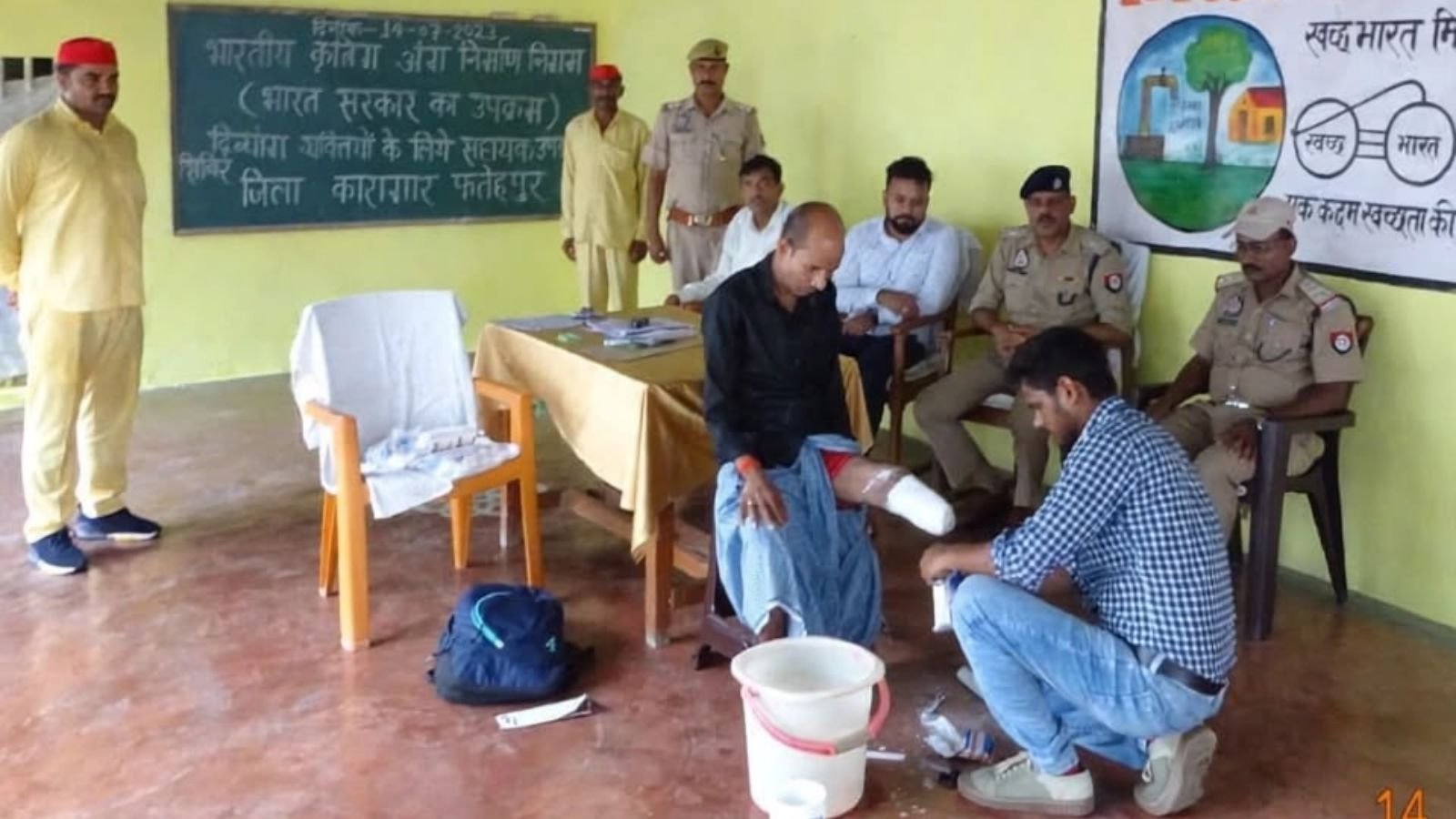
- On-Site Government Certifications: By coordinating directly with the Chief Medical Officer, Khan organized medical camps inside prison walls so inmates could obtain official disability certificates alongside free rail and bus travel passes.
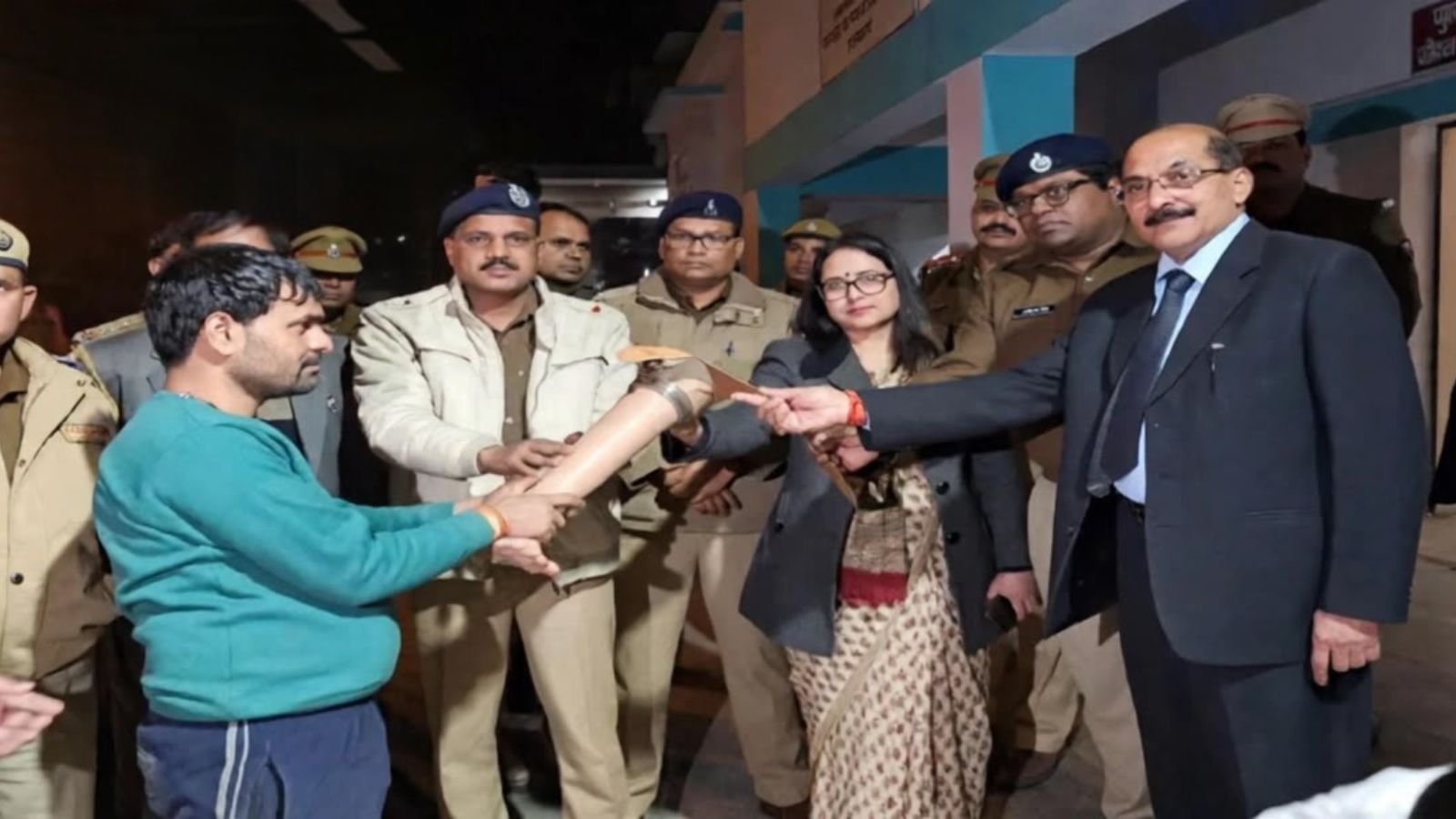
- Artificial Limbs & Assistive Devices: To restore mobility for amputees, he brought teams from ALIMCO (Artificial Limbs Manufacturing Corporation of India), Kanpur, and Narayan Seva Sansthan, Udaipur inside the jails to measure and fit artificial limbs. Partnering with the District Divyangjan Empowerment Officer, he also distributed crutches, wheelchairs, hearing aids, sensor-equipped canes, and tricycles—handing over tricycles at the moment of an inmate’s release.
Education, Hidden Talent, and Self-Respect
Beyond physical accessibility, Khan focused on dismantling the sense of inferiority often felt by disabled inmates. He mandated dedicated classroom space and close teacher attention inside prison schools.
At the Firozabad District Jail, an illiterate inmate with a disability named Guddu (name changed)—who was serving a life sentence—learned to read and write inside prison, passed his High School examination, and began preparing for his Intermediate exams.
Khan also organized annual December 3 World Disability Day programmes featuring sports and cultural competitions, where inmates received prizes and certificates signed by senior authorities. The events—previously covered by ETV Bharat at Firozabad District Jail—highlighted remarkable resilience, from an inmate with one hand playing the harmonium using his foot for support to inmates racing enthusiastically on crutches.
“Blessings From Behind Bars”
For Khan, the most lasting validation came directly from the inmates who received their certificates and prosthetics inside jail. In his account shared with The Optimist News, he recalls them saying:
“Sir, when we were outside prison, we tried to obtain disability certificates, free rail and bus passes, assistive devices, and artificial limbs. Seeing the complicated formalities, long queues, and considerable running around required everywhere, we lost courage. Yet while sitting inside the prison, we received all of them.”
Reflecting on those moments, Khan writes that even when an individual has been convicted by a court of law, placing them in a humane, dignified environment transforms their mindset—and when thinking changes, conduct follows.
“Show kindness to the people of the earth; The Lord of the Highest Heaven will show kindness to you.”
About Mohd Akram Khan
Mohd Akram Khan retired after 31 years of service in the Uttar Pradesh Jail Department. For his meritorious and distinguished service, he has been honoured with the President’s Medal for Distinguished Services, the President’s Medal for Meritorious Services, the Governor’s Medal for Distinguished Services, the Nehru Literacy Award, and the D.G. Prison’s Silver, Gold, and Platinum Discs.
