
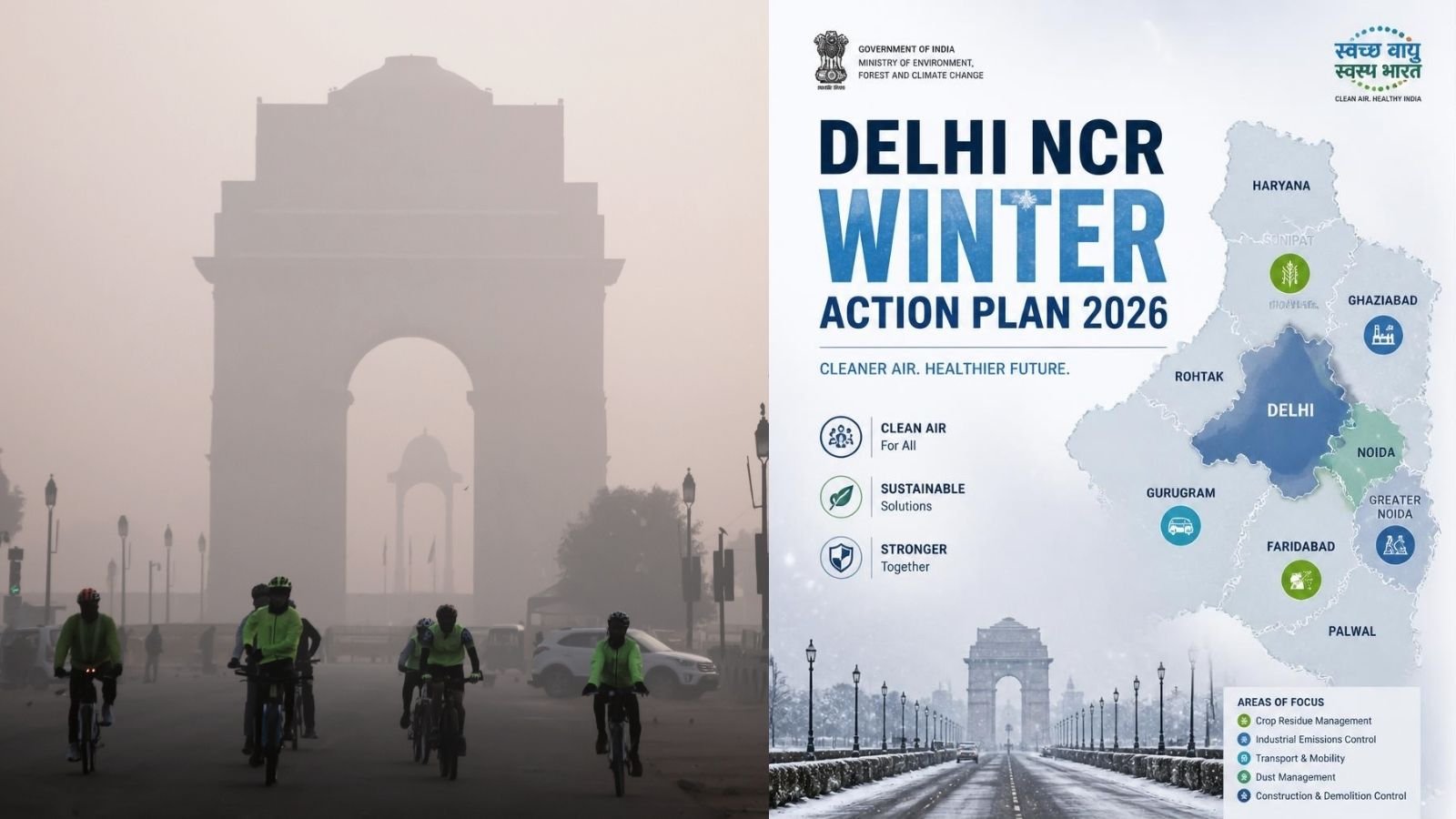
Delhi NCR Winter Action Plan 2026: “No PUC, No Fuel”, GRAP Rules, and Green Initiatives
As winter approaches, the seasonal drop in temperatures and shifting wind patterns inevitably bring a spike in air pollution across the National Capital Region (NCR). While historical data has consistently pointed to a national air quality crisis during the winter months, this year brings a proactive shift. The Delhi Government and the Commission for Air Quality Management (CAQM) have notified the Comprehensive Winter Air Pollution Control Directions 2026.
Consolidating measures into a permanent framework enforced annually from November 1 to February 28, the plan leverages technology, strict border filters, and robust corporate mandates to tackle seasonal smog without the need for reactive orders. Here is everything commuters, corporations, and residents need to know to navigate the upcoming mandates.
The “No PUC, No Fuel” Mandate
One of the most heavily enforced rules for 2026 is the strict digital crackdown on vehicular emissions.
Starting this winter, petrol, diesel, and CNG stations across Delhi will operate under a strict “No PUC, No Fuel” policy. Vehicles lacking a valid Pollution Under Control Certificate (PUCC) will be denied fuel at the pump. Authorities will no longer rely solely on paper certificates; compliance will be verified through VAHAN database checks linked to fuel pump POS systems, and ANPR (Automatic Number Plate Recognition) cameras at major intersections.
Commuter Tip: Ensure your PUCC is renewed before October 2026 to avoid heavy electronic traffic fines and fuel denial.
Vehicle Entry Bans & Transit Restrictions
To cut down on the massive nitrogen oxide (NOx) footprint caused by heavy transport, sweeping vehicular bans have been notified:
- Non-Delhi Goods Vehicles: From November 1, 2026, to January 31, 2027, non-Delhi goods vehicles falling below BS-VI emission standards will be strictly banned from entering the capital. Logistics operators must route older BS-III and BS-IV diesel fleets via the Peripheral Expressways.
- Exemptions: Vehicles running on Compressed Natural Gas (CNG) or electric power, alongside emergency and sovereign-duty vehicles, remain exempt from these border restrictions.
- Double Parking Fees: To discourage private vehicle usage, authorized municipal parking sites across the city will double their existing charges from November 1 to February 28. However, Delhi Metro Rail Corporation (DMRC) parking spaces are excluded to support park-and-ride connectivity.
Corporate & Construction Directives
Businesses and real estate developers operating within the National Capital Territory (NCT) must align their operations with new civic guidelines, reflecting the sustainable urban goals outlined in the Delhi Master Plan 2047.
1. Mandatory 50% Work From Home (WFH)
From November 1, 2026, to January 31, 2027, both government and private organizations are mandated to operate with a maximum of 50% physical staff. Companies are required to maintain digital attendance rosters, while government offices will follow staggered timings to flatten peak-hour traffic congestion.
2. The Winter Construction Freeze
While dust mitigation protocols apply all season, an absolute ban on civil construction and demolition will be enforced from December 10 to January 20. During this window, vehicles transporting sand, cement, bricks, or debris cannot enter Delhi. Critical public utility infrastructure—such as metro extensions, railways, and hospitals—remains exempt.
3. Anti-Smog Guns for High-Rises
Any commercial high-rise (malls, hotels, office towers) with a built-up area exceeding 3,000 sq. meters, as well as institutional buildings of G+5 floors and above, must continuously operate anti-smog guns or mist systems to suppress localized dust.
GRAP Stages: The Emergency Blueprint
Alongside these continuous winter rules, CAQM’s Graded Response Action Plan (GRAP) acts as a dynamic emergency trigger system if the Air Quality Index (AQI) degrades:
| GRAP Stage | AQI Range | Key Emergency Measures |
| Stage I (Poor) | 201–300 | Mechanized sweeping, dust mitigation, and strict bans on open waste burning. |
| Stage II (Very Poor) | 301–400 | Diesel generator (DG) set restrictions and further enhanced parking fee hikes. |
| Stage III (Severe) | 401–450 | Total bans on BS-III petrol and BS-IV diesel cars; schools transition to hybrid formats. |
| Stage IV (Severe+) | 450+ | Total non-BS-VI truck bans and closure of non-emergency commercial sites. |
Green Solutions & Citizen Reporting
While these restrictions seem stringent, they underscore a massive push toward green infrastructure. The Delhi government is actively expanding its clean mobility framework through the Delhi EV Policy, which heavily subsidizes the shift away from fossil fuels.
Enforcement also relies on crowdsourced civic action. Residents are encouraged to utilize official platforms like the Delhi Government’s Green Delhi App or the Central Pollution Control Board (CPCB)‘s SAMEER App to upload geotagged photo evidence of localized violations, such as biomass burning or illegal industrial smoke. By complying with these 2026 mandates and adopting cleaner transit options, residents can play a direct role in clearing the capital’s skies.
