
AAP and the Supreme Court: How the 2026 Winter Mandates Are Reshaping Delhi-NCR’s Corporate Operations
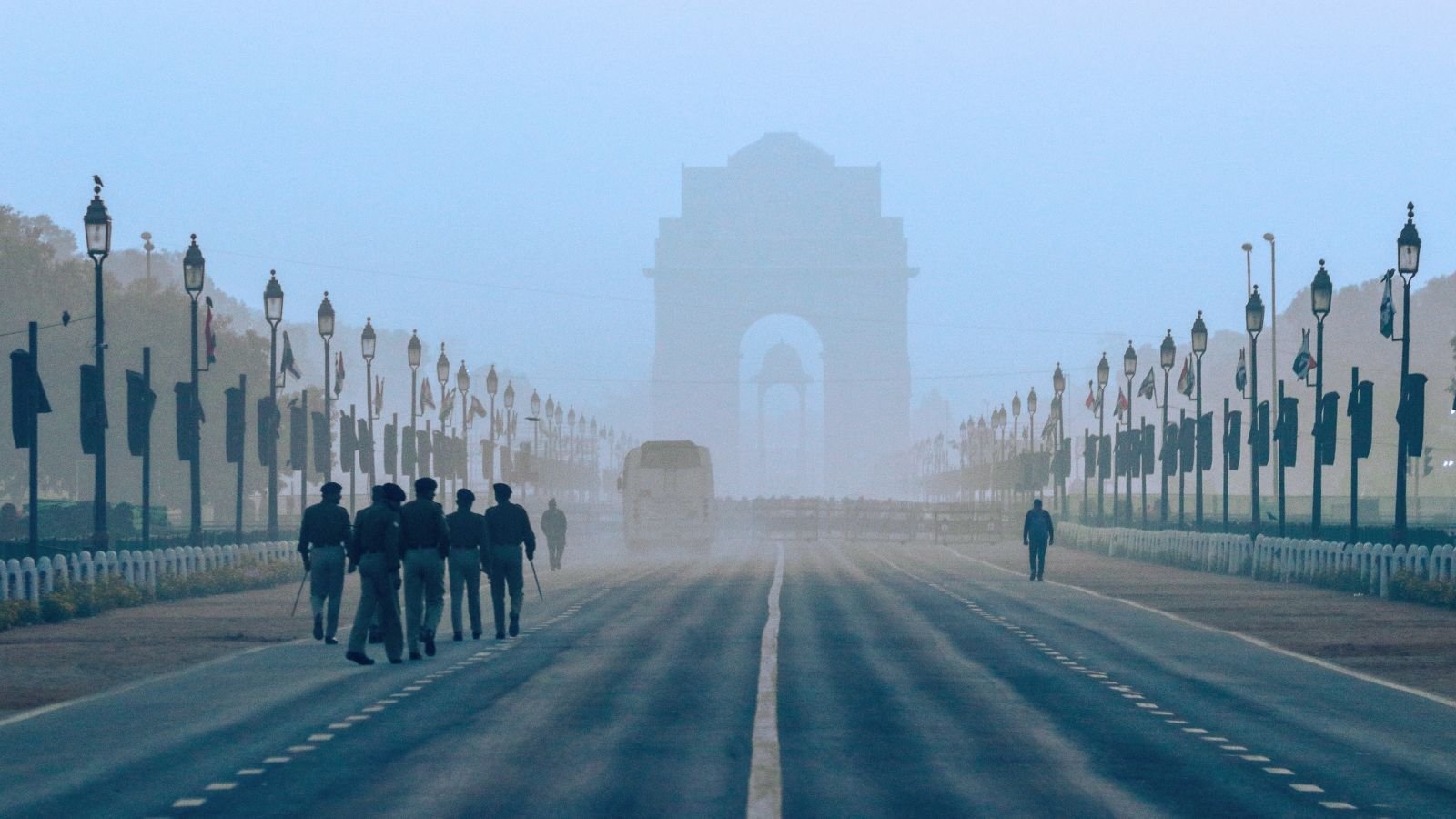
Delhi-NCR’s winter smog is no longer just a seasonal public health advisory; it has become a legally enforced corporate bottleneck. This November, the environmental crisis has triggered immediate judicial and political intervention, forcing the Supreme Court and the AAP-led Delhi government to execute some of the strictest urban mobility and industrial restrictions seen in recent years.
Applying a reverse inverted pyramid lens to this crisis reveals that the immediate legal mandates handed down this week are just the tip of the spear. The deeper, broader reality is that these specific judicial actions are triggering a massive, structural overhaul of how Big Tech, logistics firms, and commercial real estate developers operate across Gurugram, Noida, and New Delhi.
To understand the macro-economic shift, we must first look at the acute legal triggers initiated this week.
The Factual Baseline: Live Legal and Environmental Triggers
Corporate operational shifts are entirely reactionary to the legal frameworks enforced during peak smog. As of the second week of November 2026, the regulatory environment is defined by the following verified data points and judicial interventions:
- Supreme Court Observations: Chief Justice of India (CJI) Surya Kant recently pulled up authorities over the severe air quality, explicitly stating that “bumper-to-bumper traffic” across Delhi-NCR borders is a primary driver of the crisis.
- The Elite Vehicle Critique: The Supreme Court specifically questioned the role of high-end and commercial vehicles in exacerbating the pollution zone, noting that those who use large cars as a “social and status symbol” are contributing significantly to the smog.
- Severe AQI Metrics: Following Diwali, Delhi’s overall Air Quality Index (AQI) has hovered around 370. Specific monitoring stations have recorded hazardous levels, with IGI Airport Terminal 3 registering 385 and Chandni Chowk peaking at 391.
- GRAP Activation: Under the newly revised September 2026 schedule, the Commission for Air Quality Management (CAQM) has aggressively invoked the Graded Response Action Plan (GRAP) Stage III across the region, which imposes stringent restrictions on construction and vehicle movement.
- The Agricultural Factor: Despite political claims to the contrary, data indicates that 77 percent of paddy stubble (parali) has already been burnt in AAP-governed Punjab, compounding the atmospheric inversion flowing into the capital.
The Regulatory Crossfire: Big Tech RTO vs. Supreme Court Mandates
Moving outward from the immediate courtroom observations, the first major sector taking a direct hit is corporate human resources and facility management.
When the Supreme Court demands traffic reductions, regulatory leniency for corporate campuses vanishes. The activation of GRAP Stage III inherently discourages heavy commuting, often forcing a 50 percent physical attendance limit for government offices and pushing private corporations to adopt matching work-from-home (WFH) protocols to alleviate road congestion.
This legal pressure directly collides with the massive corporate restructuring efforts currently underway in the capital. Companies that recently executed strict five-day return-to-office mandates—most notably outlined in our recent analysis of how the Amazon India RTO is redrawing Gurugram’s commercial real estate—are now caught in a regulatory crossfire.
Facility managers in DLF Cyber City and Golf Course Road are scrambling to temporarily pause their aggressive RTO rollouts, pivoting back to localized hybrid rosters to remain compliant with government advisories. Agile D2C startups are actively using this as a competitive advantage, leveraging the government’s WFH advisories to poach top-tier engineers who are actively resisting a forced daily commute through hazardous AQI levels.
The Fleet Overhaul: AAP’s Border Enforcement and the EV Shift
Beyond the office desk, the AAP government’s execution of the GRAP mandates has mobilized extensive civic and transport enforcement across the capital’s borders. The most disruptive policy for the corporate class is the absolute ban on BS-III petrol and BS-IV diesel light motor vehicles.
Transport department teams, backed by Automatic Number Plate Recognition (ANPR) cameras, are strictly monitoring key arteries connecting Gurugram and Noida to Delhi. Executives who rely on older luxury diesel SUVs are finding themselves legally barred from driving to their own offices, facing massive fines and vehicle impounding if caught crossing state lines.
This stringent border enforcement is acting as an aggressive catalyst for the region’s premium electric vehicle adoption. The threat of annual winter vehicle bans is exactly why discerning corporate buyers are actively bypassing parallel imports and traditional combustion engines, opting instead to waitlist for premium, compliant green mobility. (Read our breakdown on why Gurugram executives are pivoting to the Tata Sierra EV over Tesla to future-proof their garages against these exact environmental mandates).
The Macro View: Supply Chain Paralysis and Real Estate Delays
Zooming out to the broader economic base of the inverted pyramid, the most severe, long-term financial impact of these legal mandates hits the real estate and logistics sectors.
Under the current Stage III and potential Stage IV directives, the AAP government is legally bound to halt all non-essential construction and demolition activities. For commercial real estate developers expanding massive tech parks in Noida Sector 62 or luxury residential towers in Gurugram, a sudden 30-to-45-day halt means missing critical Q4 delivery deadlines and incurring massive holding costs.
Furthermore, the entry of heavy diesel trucks (excluding those carrying essential commodities) into Delhi is heavily restricted during peak GRAP phases. This forces supply chain directors for major FMCG and retail brands to completely reroute their logistics networks. Corporations are now required to secure CNG trucking fleets at premium surge rates and warehouse their goods outside the city limits, drastically increasing last-mile delivery costs during the lucrative post-festive retail season.
Building “Pollution Resilience” for 2027
Ultimately, the friction between the Supreme Court’s environmental directives and the Delhi government’s enforcement reveals a permanent shift in how business is conducted in the NCR. Navigating November is no longer about simply buying office air purifiers; it requires meticulous operational forecasting.
As executives attempt to balance their Q4 revenue targets with the realities outlined in our Live Delhi Weather & GRAP Advisory, one thing is abundantly clear: building “pollution resilience” into a 2027 business model is no longer an optional corporate social responsibility initiative. It is a strict legal and logistical necessity.
