
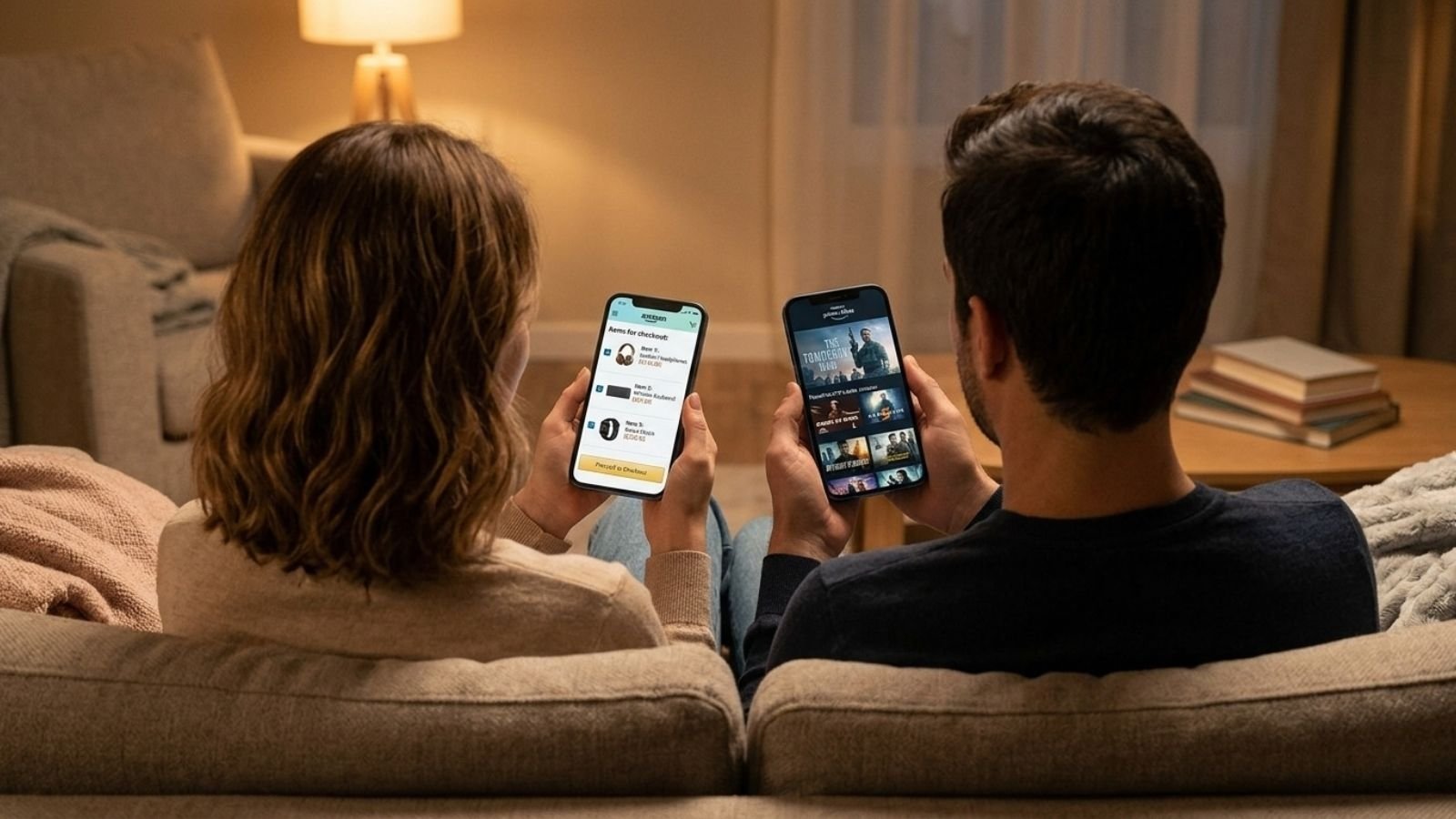
Amazon Prime’s ‘Screen-to-Cart’ Masterclass: How One Bundle is Quietly Monopolizing the Delhi-NCR Wallet
For the average high-income household in Delhi-NCR, the monthly credit card statement has become a graveyard of micro-subscriptions. Between Zomato Gold for dining, Zepto Pass for groceries, Netflix for premium weekend binges, and Spotify for the commute, subscription fatigue has officially reached a tipping point. Consumers are actively looking to consolidate their digital ecosystems.
While local quick-commerce startups and global streaming giants engage in hyper-competitive, single-front turf wars, a much larger, quieter monopoly is taking over the capital’s household budgets.
By brilliantly merging high-budget entertainment with ruthless logistics, Amazon India is executing a business strategy that every D2C founder and tech executive in Gurugram needs to study. Here is why the Amazon Prime ecosystem remains fundamentally bulletproof in 2026, and how its “screen-to-cart” pipeline is outsmarting the competition.
The Trojan Horse: Amazon Prime Video
To understand the genius of Amazon’s structural advantage, you have to realize that they are not actually fighting a streaming war.
When Netflix invests millions into local content like the highly relatable Dilwali Diwali, their sole objective is to monetize your screen time. When Flipkart runs a massive festive sale, they are trying to monetize your wallet.
Amazon Prime Video operates on a completely different psychological axis. It functions as a high-value loss-leader—a Trojan horse designed to get inside your home. Amazon does not need shows like Mirzapur or The Boys to generate direct, standalone profitability in the way Netflix or JioHotstar does. Instead, the entertainment serves as the ultimate customer acquisition and retention tool.
Once a user subscribes to watch a trending Friday night release, they are instantly locked into the Prime ecosystem. The psychological shift is immediate: because the user has already paid for the subscription, they default to Amazon for their e-commerce purchases to “maximize” the value of the free, one-day shipping. Streaming acquires the user; retail drives the actual revenue.
Defending Against the Quick-Commerce Threat
Over the last 24 months, 10-minute delivery apps like Blinkit and Zepto have completely rewritten Gurugram’s real estate and consumer habits. Observers assumed this instant-gratification wave would severely dent Amazon’s market share in metropolitan hubs.
Instead, Amazon India leveraged its bundled value proposition. Local quick-commerce apps are currently trapped in a vicious cycle of razor-thin grocery margins, heavily subsidizing deliveries to retain users. Amazon sidesteps this margin war entirely.
While a consumer might use a quick-commerce app for emergency groceries, Amazon secures lifetime loyalty by tying premium, exclusive entertainment to its shipping logistics. No local quick-commerce startup has the capital to bundle Hollywood or Bollywood blockbusters with their delivery fees, leaving Amazon with a defensive moat that is financially impossible for local unicorns to replicate.
The Boardroom Lesson for NCR Founders
For bootstrapped founders and SaaS executives operating out of Cyber City or Noida, the Amazon flywheel offers a critical lesson in Q1 2027 strategic planning: Stop selling standalone products and start building indispensable ecosystems.
Customer acquisition costs (CAC) on Meta and Google are at an all-time high. Fighting a price war on a single front—whether that is software, D2C fashion, or cloud kitchens—is a race to the bottom. The companies surviving the current funding winter are those that bundle cross-vertical value, making it economically illogical for the consumer to unsubscribe.
As streaming platforms hike their standalone prices and food delivery apps tack on surge fees during the winter pollution and GRAP restrictions, Amazon India continues to grow strong by offering the one thing the modern consumer actually wants: a single, comprehensive ecosystem that caters to both their screen and their shopping cart.
