
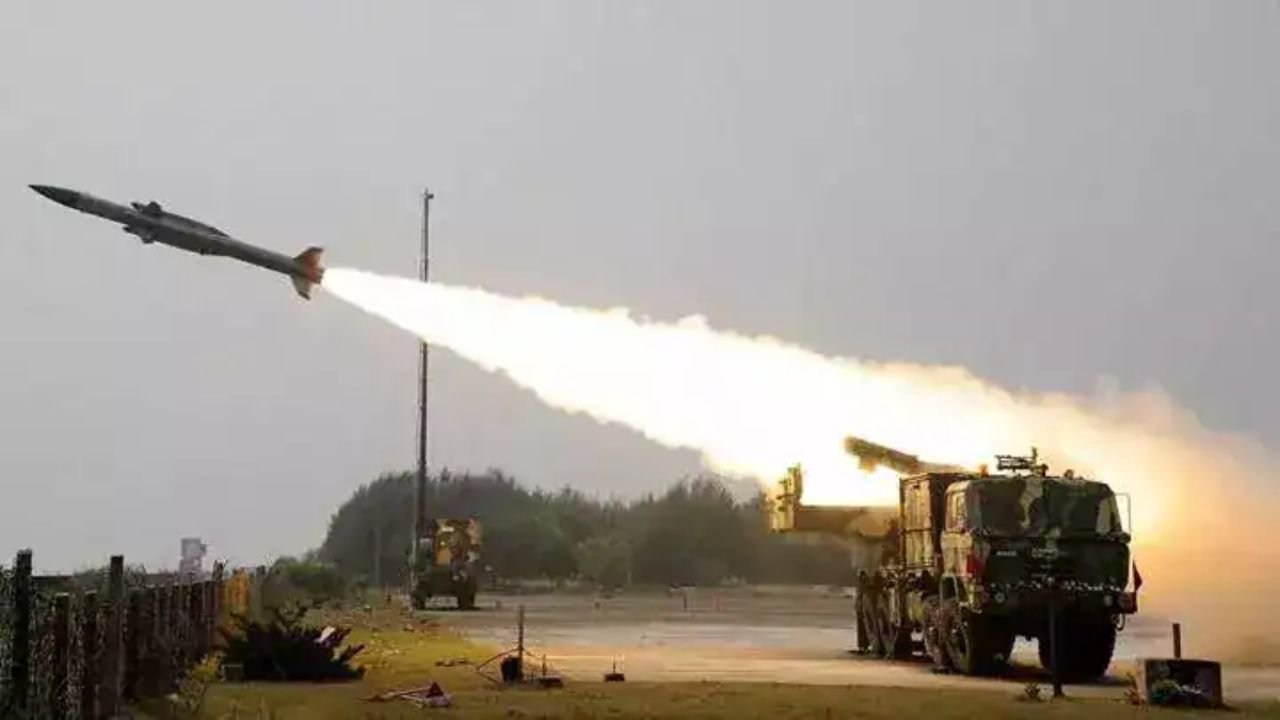
Armenian Army Praises Indian Akash-1S Air Defense System as Key Shield in New Military Drills
In a major endorsement of Indian defense technology on the global stage, the Armenian Armed Forces have showcased the Indian-supplied Akash-1S surface-to-air missile (SAM) system during high-level military exercises. The deployment highlights Armenia’s ongoing efforts to build a modernized, multi-layered air defense grid capable of neutralizing modern aerial threats.
Purchased under a landmark agreement with India, the Akash-1S system—developed by India’s Defence Research and Development Organisation (DRDO) and produced by Bharat Dynamics Limited (BDL)—has quickly earned praise from Armenian defense officials for its target acquisition speed, operational mobility, and precision tracking capabilities.
A Major Milestone for Indian Defense Technology Exports
Armenia’s acquisition of the Akash-1S makes it the first international export customer for India’s indigenous medium-range air defense system. The deployment during recent field drills focused on testing system integration, target response times, and multi-sensor coordination alongside short-range air defense units.
The exercises evaluated how swiftly the Akash-1S can detect, lock onto, and intercept simulated aerial targets, including low-flying unmanned aerial vehicles (UAVs), fighter jets, and cruise missiles.
As news of this milestone circulated across global media, I genuinely felt goosebumps and an overwhelming sense of pride as an Indian citizen. Seeing indigenous engineering—conceived, built, and perfected on our home soil—earn high praise on the international stage is a defining moment. It is truly inspiring to witness India evolve from relying on foreign technology to standing tall as a global leader in high-precision innovation.
Akash-1S Air Defense System: Key Specifications
The Akash-1S is an upgraded variant of the baseline Akash missile platform, featuring an indigenous active radar homing head for superior target tracking accuracy.
| Feature / Parameter | Operational Capability |
| System Type | Mobile Medium-Range Surface-to-Air Missile (SAM) System |
| Developer & Manufacturer | DRDO (Design) / Bharat Dynamics Limited (BDL) & BEL (Production) |
| Operational Engagement Range | 25 to 30 kilometers |
| Engagement Altitude Ceiling | Up to 18 kilometers |
| Target Interception Types | Fighter jets, drones/UAVs, cruise missiles, and helicopters |
| Guidance System | Mid-course command guidance + Terminal active radar seeker |
| Key Radar System | 3D Rajendra Passive Electronically Scanned Array (PESA) Radar |
How Akash-1S Strengthens Armenia’s Layered Air Defense
For years, Armenia relied primarily on legacy Soviet-era defense infrastructure. Following recent security challenges in the South Caucasus, Yerevan embarked on a major defense modernization drive aimed at acquiring combat-proven, cost-effective, and technologically advanced systems from non-traditional partners like India.
1. Rapid Multi-Target Tracking
The core strength of the Akash system lies in its 3D Rajendra radar, which can track up to 64 targets simultaneously and engage up to 12 targets at once. This capability is critical in high-intensity operational environments where swarms of reconnaissance drones or precision munitions attempt to overload traditional radar grids.
2. High Mobility and All-Weather Readiness
Mounted on high-mobility tracked and wheeled chassis, Akash-1S units can quickly relocate across mountainous terrain—an essential feature for Armenia’s rugged geography. The system operates smoothly across extreme weather conditions, maintaining target lock regardless of thermal or atmospheric interference.
3. Cost-Effective Deterrence
Compared to Western surface-to-air missile equivalents that cost upwards of $1.5 million per missile, the Akash-1S delivers equivalent intercept probability at a fraction of the procurement and maintenance cost. This makes it an ideal choice for nations building sustainable defense architectures.
The Broader Impact on India’s Defense Tech Ecosystem
The successful deployment and public endorsement of the Akash-1S in Armenia mark a pivotal moment for India’s defense manufacturing sector.
Historically known as one of the world’s largest defense importers, India has rapidly transformed under its “Make in India” and defense export initiatives. With systems like the Akash missile, Pinaka multi-barrel rocket launchers, and Swathi weapon locating radars gaining international operational approval, several nations across Southeast Asia, Africa, and South America are now evaluating Indian high-tech defense hardware.
As Armenia continues to integrate Indian defense tech into its standing forces, the Akash-1S stands out as a flagship example of how Indian innovation is earning trust and respect on the international stage.
Frequently Asked Questions (FAQs)
What is the Akash-1S missile system?
The Akash-1S is an advanced, indigenous medium-range surface-to-air missile system developed by India’s DRDO. It features an upgraded active radar seeker that allows precise interception of enemy aircraft, drones, and cruise missiles within a 30-kilometer range.
Why did Armenia purchase the Akash-1S system from India?
Armenia acquired the Akash-1S system as part of a strategy to modernize its armed forces with versatile, cost-effective, and high-precision air defense capabilities capable of countering modern aerial threats like military drones and precision guided missiles.
Which Indian companies manufacture the Akash missile system?
The Akash air defense system was designed by DRDO and is produced by Bharat Dynamics Limited (BDL) and Bharat Electronics Limited (BEL), alongside private industrial partners like Tata Advanced Systems and Larsen & Toubro.
