
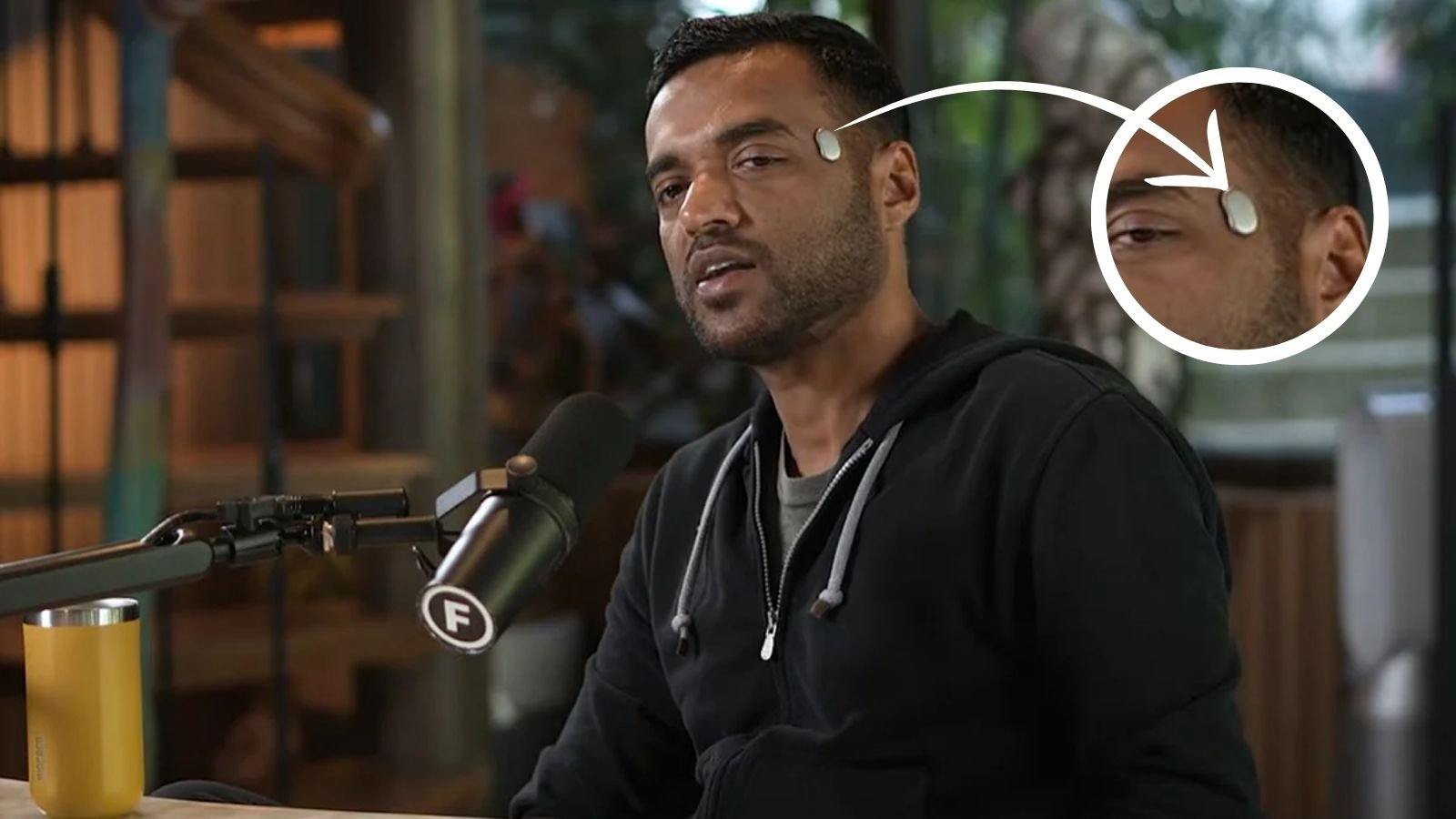
At ₹85,000, Deepinder Goyal’s ‘Temple’ is Gurugram’s Newest Status Symbol (And Why He Says You Shouldn’t Buy It)
Zomato co-founder Deepinder Goyal has already conquered the food delivery market and amassed a staggering ₹219 crore real estate empire. Now, he is entering the ultra-premium wellness space with a startup already valued at $375 million (approx. ₹3,150 crore) before its product has even officially launched.
On November 1, 2026, Goyal’s health-tech company will officially open public pre-orders for its highly anticipated first product: Temple, a screenless, brain-monitoring wearable. Priced at a premium ₹85,000 for early access buyers, the device is generating immense hype across Delhi-NCR’s corporate circles.
But in a masterclass of luxury marketing, Goyal is explicitly warning consumers not to buy it if they haven’t mastered the basics of sleep and nutrition.
Here is everything you need to know about the Temple wearable, the clinical science driving its massive valuation, and why Gurugram’s elite are rushing to join the waitlist.
What is the Temple Wearable?
Unlike the Apple Watch or the Oura Ring, Temple completely abandons wrist and finger-based tracking. The device is a compact, pebble-shaped unit without a display or physical buttons that adheres directly to the skin near your temple—between the forehead and the ear.
Instead of tracking standard metrics like step counts, Temple uses light-based optical sensors to monitor “BrainFlow,” mapping changes in cerebral blood flow and oxygenation in response to daily strain.
The companion app translates this data into an Entropy Score ranging from 1 to 250. This score quantifies your body’s overall physiological strain based on stress, sleep deprivation, intense exercise, and even caffeine consumption.
The Clinical Backing: The London Acquisition
A consumer health company cannot survive on a ₹85,000 price tag using gimmicky language alone; it requires clinical validation.
A few months ago, Goyal met Dr. Robert Mohr and Dr. Avi Roy, who ran a longevity medicine practice in London called Longevous. After a dinner conversation, the two doctors spent two months wearing the Temple device, rigorously pressure-testing its Entropy metric and reviewing its early scientific manuscripts.
Rather than just using their feedback, Goyal made a decisive founder move: he acquired Longevous entirely. Dr. Mohr is now Temple’s Chief Medical Officer, and Dr. Roy serves as the Head of Science. By bringing his harshest clinical critics in-house, Goyal has ensured that Temple is grounded in validated medical science, heavily driving up investor trust.
The ₹85,000 Exclusivity Factor
Temple is not a mass-market consumer electronic; it is positioned as a bespoke Veblen good. To justify the status-symbol label, the device abandons standard plastic housing for a premium aesthetic and luxury perk ecosystem:
- Hand-Made to Order: Goyal announced on X that every device in Batch 01 is hand-made to order, requiring a delivery window of up to three months that pushes early shipments into early 2027.
- Lifetime Subscription Included: The upfront cost includes a lifetime subscription to the software platform, avoiding the recurring monthly fees charged by main competitors.
- Medical-Grade Adhesives: The device sticks to your head using single-use adhesive tapes called “Grips,” designed to withstand running, showering, swimming, and sauna sessions (excluding scuba diving). Buyers receive a lifetime supply of these Grips.
- Luxury Finishes: The hardware comes in six metallic and organic finishes: True Gold, Rose Gold, Black Mirror, and three limited editions: Real Jade, Deep Blue, and Purple Funk.
The “Reverse Psychology” Warning
The project has serious financial muscle behind it. Following a recent secondary share sale in July, Temple’s market valuation surged to $375 million, building on an initial $54 million seed round from heavyweights like Peak XV Partners and angel investors like Kunal Shah.
Yet despite this massive financial backing, Goyal has utilized an unconventional, highly exclusionary launch strategy. On social media, he cautioned eager buyers that the device is purely for advanced wellness research, not for diagnosing medical conditions. Furthermore, he explicitly advised that individuals who lack basic discipline in sleep and diet should save their money, noting that the device is designed to fine-tune existing high-performance habits rather than fix broken ones.
This exclusionary warning has only fueled demand among the startup founders and executives inhabiting Gurugram’s premium zip codes—the same demographic paying massive premiums for DLF Camellias maintenance.
How to Pre-Order on November 1
To secure a unit from Batch 01, public pre-orders open on Sunday, November 1, 2026. Early access members who joined the waitlist months ago are already receiving email invitations to purchase the device. For everyone else, Goyal advises downloading the official Temple app from the App Store, setting up an account, and keeping your cart ready for the public launch.
Looking to pair your new wellness routines with some premium downtime? Check out our District App Dining & Tickets Guide to plan your post-Diwali weekend across Delhi-NCR.
