
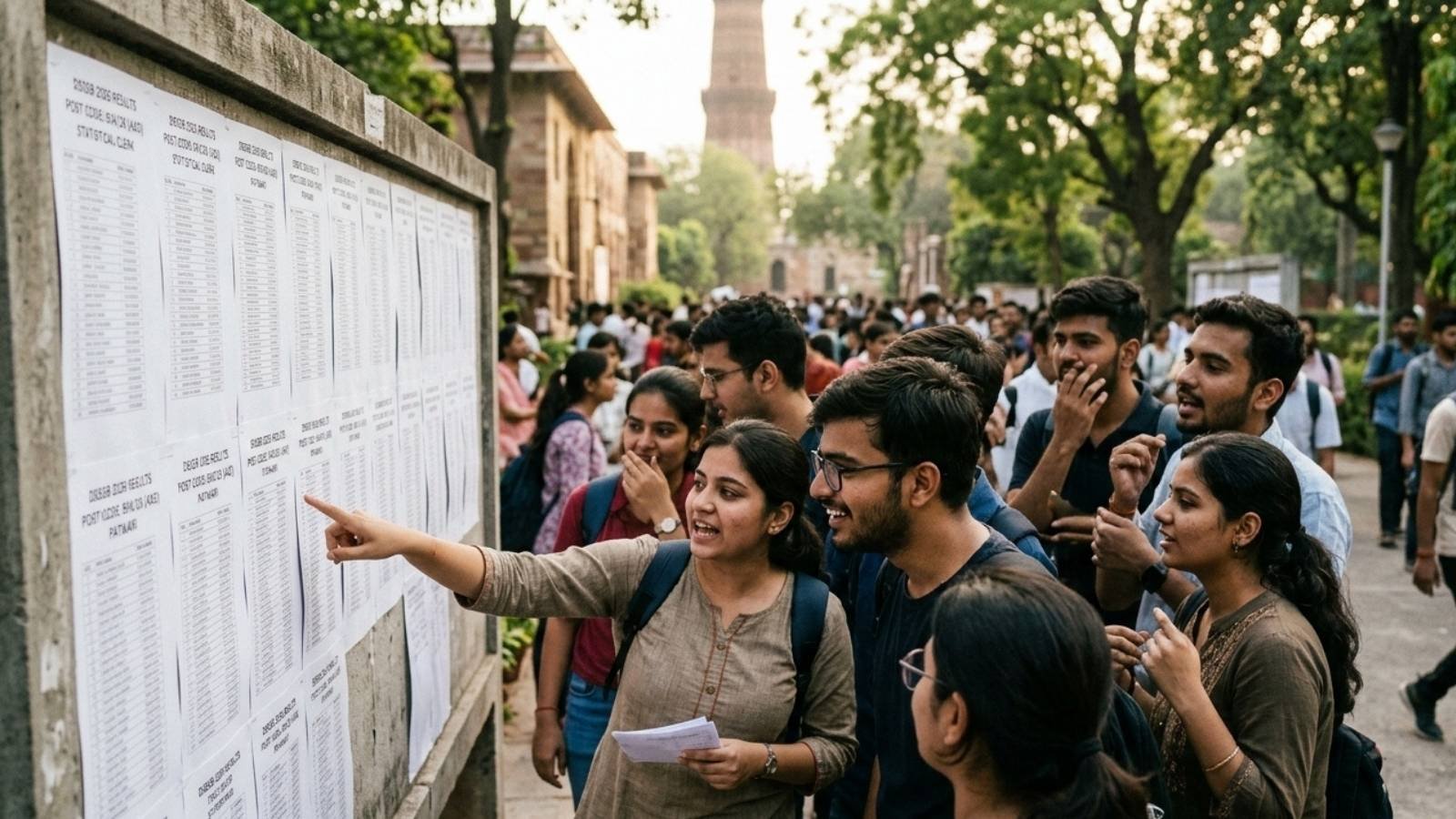
Career Defining Month: The Ultimate Delhi NCR Government Exam Guide (October 2026)
Delhi NCR is currently experiencing one of its most vibrant Octobers in recent memory. While the streets of Chittaranjan Park prepare for Durga Puja and Sunder Nursery gets ready for candlelight concerts, thousands of young graduates across the capital are preparing for something entirely different: massive state and central government recruitment drives.
Securing a government post within the National Capital Territory (NCT) of Delhi offers unmatched stability, competitive pay scales, and the rare perk of a lifelong posting within the capital region. This October, two primary recruitment authorities are running overlapping, high-stakes examination cycles. The Delhi Subordinate Services Selection Board (DSSSB) is coordinating state-level recruitments for ministerial, technical, and administrative boards. Simultaneously, the Staff Selection Commission (SSC) is managing central government deployments, most notably for the highly coveted Delhi Police force.
This master guide breaks down the exact Computer-Based Test (CBT) shift schedules, newly revised examination patterns, critical correction windows, and reporting protocols you need to secure your seat.
The DSSSB October 2026 Master Roadmap
The latest revised administrative directive from the DSSSB outlines a comprehensive examination timeline running consecutively from September 21 to October 24, 2026.
Standard Daily Shift Framework
To manage the enormous volume of applicants without compromising testing integrity, the DSSSB has organized its online exams into three distinct, highly regulated daily shifts. Each session is meticulously timed for exactly two hours:
- Shift 1 (Morning Session): 09:00 AM – 11:00 AM
- Shift 2 (Afternoon Session): 01:00 PM – 03:00 PM
- Shift 3 (Evening Session): 05:00 PM – 07:00 PM
(Important Note: Candidates cannot choose their shifts. You must cross-check your official e-admit card to confirm your assigned timing, as it is dynamically locked to specific post allocations.)
Post-Wise Exam Timeline & Vacancy Breakdown
The board has strategically distributed specific job roles into targeted testing windows based on applicant volume and the urgent requirements of Delhi’s administrative departments.
1. Assistant Section Officer (ASO) Focus (September 21 – October 18) The Assistant Section Officer (ASO) / Grade-II (Post Code 804/26) is the absolute anchor of this recruitment cycle. Because this post places candidates directly into the General Administration framework of the Government of NCT of Delhi, it attracted a record-breaking number of applications.
- The Schedule: To accommodate the sheer volume of candidates, the board is running continuous ASO testing across all three shifts every single day during this month-long window.
- The Goal: This Tier 1 examination rigorously evaluates foundational analytical skills before shortlisting candidates for the subsequent merit stages.
2. Technical and Clerical Transitions (October 19 – October 24) Immediately following the ASO testing block, the DSSSB pivots to highly specialized portfolios requiring distinct skill sets:
- Statistical Clerk (Post Code 19/25): Scheduled for October 19. This role within the Municipal Corporation of Delhi (MCD) focuses heavily on data interpretation, statistical ledgers, basic arithmetic evaluation, and municipal record keeping.
- Katib / Calligrapher (Post Code 13/26): Also scheduled for October 19, serving the Urdu Academy.
- Patwari (Post Code 14/26): Running on a multi-shift grid from October 21 to October 24. This test is designed to fill crucial land revenue, zoning, and field administration roles for the Delhi Urban Shelter Improvement Board (DUSIB).
- The Technical Core (October 24): The October cycle officially concludes with specialized technical positions, specifically the Assistant Grade-I (IT) (Post Code 07/26) for DT&TDC, and Optometrist (Post Code 09/26) for the Health & Family Welfare department. These exams feature a unique blend of general aptitude testing and highly specific domain-knowledge questions.
Core DSSSB Examination Architecture & Syllabus
For the vast majority of non-technical ministerial positions (including the ASO Tier 1 and the Statistical Clerk exams), the board utilizes a standardized One-Tier General Examination model. Understanding this structure is critical for pacing yourself during the 120-minute test.
The assessment consists of 200 Multiple Choice Questions (MCQs), holding a maximum weightage of 200 marks, evenly split across five core sections:
- General Awareness (40 Marks): Focuses on current affairs, Indian history, polity, constitutional frameworks, and specific questions related to Delhi’s geography and civic structure.
- Mental Ability & Reasoning (40 Marks): Tests cognitive speed through analogies, spatial reasoning, logic grids, and blood relation puzzles.
- Numerical Ability & Data Interpretation (40 Marks): Core arithmetic, data tables, fractions, simplifications, and percentage calculations.
- English Language & Comprehension (40 Marks): English grammar, vocabulary, synonyms/antonyms, and reading passage analysis.
- Hindi Language & Comprehension (40 Marks): Hindi grammar (Vyakaran), translation, usage, and vocabulary.
Marking Scheme & Penalties: Accuracy is far more important than sheer volume. A strict negative marking penalty of 0.25 marks is deducted for every incorrect answer. Leaving a question completely blank results in zero marks and carries no penalty.
Exam Medium: The test interface is bilingual (allowing candidates to toggle between English and Hindi), except for the specific English and Hindi language test sections.
SSC Sub-Inspector in Delhi Police & CAPFs Updates
While the DSSSB dominates state hiring, the Staff Selection Commission (SSC) handles the massive recruitment drives for central forces deployed within the capital. For local graduates looking to join law enforcement, the SSC Sub-Inspector in Delhi Police & CAPFs exam is the ultimate prize.
The commission recently closed its massive 2026 application window, actively seeking to fill 1,871 Sub-Inspector vacancies heavily featuring the Delhi Police. Here is what candidates need to know right now:
- Primary Examination Date: The foundational recruitment examination for the Sub-Inspector roles is officially scheduled to commence on October 3, 2026.
- The Critical Correction Window: For candidates who realized they made an error in their initial application forms (such as incorrect photo dimensions, misspelled names, or wrong category selections), the SSC is opening a mandatory application correction window from October 8 to October 10, 2026. Missing this window means immediate disqualification if your documents do not match your application.
- The Revised 2026 Exam Pattern: The SSC has introduced a major structural change to the testing format this year. The newly revised 2026 exam pattern now features strict 15-minute sectional timers for Paper 1. Unlike previous years where candidates could freely jump between sections and manage their own time, you are now locked into each section for a predetermined time limit. This demands a massive shift in mock-test strategy, prioritizing speed and immediate decision-making over cherry-picking easy questions.
Additional SSC Central Deployments
Beyond the Delhi Police roles, the SSC is currently managing two other massive testing windows that impact candidates across the NCR:
- SSC Multi-Tasking Staff (MTS) & Havaldar: The Computer-Based Test (CBT) window for this massive 2026 recruitment cycle is currently active, running continuously from September all the way through November 2026.
- SSC Combined Higher Secondary Level (CHSL): Major tier examinations have continued into late September, with candidates now anxiously awaiting the subsequent skill test notifications following the official SSC Examination Calendar.
Reporting Protocols & Mandatory Test Center Rules
The DSSSB and SSC enforce incredibly strict entry and security guidelines. In previous years, hundreds of candidates were turned away at the gates for minor infractions. Do not let months of preparation go to waste over a logistical error.
- Punctual Reporting: Candidates must arrive at the test center at least one to two hours before their designated shift begins.
- Shift 1 Entry Begins: 07:00 AM
- Shift 2 Entry Begins: 11:00 AM
- Shift 3 Entry Begins: 03:00 PM
- The 30-Minute Rule: Entry gates close exactly 30 minutes before the exam starts. Latecomers will not be admitted under any circumstances, regardless of traffic or transit delays.
- Mandatory Verification Documents: You must carry a physical, printed copy of your official e-Admit Card (downloaded directly from the DSSSB OARS Portal or the SSC portal). Alongside the admit card, you must present a valid, original government-issued photo ID. Acceptable forms of identification include a PAN Card, Passport, or Aadhaar Card. (Note: Digital copies on your phone or photocopies are strictly prohibited).
- Strict Dress Code: To ensure biometric scanning and physical frisking procedures run rapidly, candidates must adhere to a clean dress code. Avoid wearing thick-soled shoes, garments with exceptionally large buttons, or heavy metallic jewelry. Electronic items—including cell phones, calculators, and smartwatches—as well as physical wallets and bags, are completely banned inside the testing perimeter.
How to Download Your DSSSB e-Admit Card
If you are scheduled for the October block, follow these exact steps on the state utility network:
- Navigate to the official portal at dsssb.delhi.gov.in.
- Locate and click on the active banner specifically labeled: “Link for Download e-Admit Card for CBT Exams Scheduled from 21 Sept to 24 Oct 2026”.
- Enter your unique Application Number and your Date of Birth (in the DD/MM/YYYY format) into the OARS login interface.
- Type in the required captcha security code and click ‘Submit’.
- Your dashboard will display your exact shift timing, assigned test center city, and roll number details. Print a clear, high-quality copy immediately for your records.
Balancing Preparation with Delhi’s October Culture
While the pressure of these exams is immense, psychological burnout is a very real threat to your performance. Delhi NCR offers incredible ways to decompress without spending a fortune.
If your DSSSB ASO shift or SSC SI exam finishes early in the month, take a morning off to visit the massive open-street community fitness and music event at Connaught Place for Raahgiri Day featuring Euphoria on October 4. Alternatively, if you prefer a quieter environment to relax your mind after heavy quantitative revision, the free entry Indraprastha Nritya Mahotsav classical dance festival at Purana Qila runs through the first weekend of October.
Success in these recruitment cycles is not just about rote memorization; it requires strategic time management, strict adherence to testing protocols, and maintaining a clear, well-rested mind. Cross-check your admit cards, plan your metro transit routes in advance to avoid festive traffic, and step into the testing hall with confidence.
