
The Clean Air Premium: How Gurgaon’s AQI is Redefining Luxury Real Estate Pin Codes
The traditional metrics of luxury real estate in the National Capital Region have officially shifted. For decades, high-net-worth individuals (HNWIs) and corporate executives purchasing property in Haryana based their decisions entirely on proximity to the Cyber City commercial hub, clubhouse amenities, and developer legacy.
However, as the November 2026 weather inversion settles over the region, a new, far more critical metric is dominating boardroom real estate discussions: micro-climate engineering and localized air quality.
With the average AQI Gurgaon readings consistently breaching the ‘Severe’ and ‘Hazardous’ categories this week, the toxic air is no longer just a seasonal annoyance. It is actively redefining property valuations.
Why AQI is Dictating Gurgaon’s Luxury Real Estate (Key Pointers)
To understand how environmental data is currently shaping Gurugram property valuations, here are the primary market shifts driving the “Clean Air Premium”:
- Micro-Climate Engineering: Ultra-luxury societies are utilizing STP-linked sprinkler networks and rooftop anti-smog guns to suppress localized particulate matter.
- Density vs. Green Buffers: High-net-worth buyers are abandoning maximum square footage in favor of low-density projects surrounded by massive, mature green belts that act as natural pollution sinks.
- Commercial-Grade Filtration: New developments are replacing standard amenities with MERV-13 central filtration systems and hospital-grade indoor HVAC units.
- Pin Code Pivot: Buyers are actively comparing localized AQI monitors to choose between heavily congested new corridors and older, tree-lined established sectors.
Here is an executive breakdown of how these factors are fundamentally restructuring Gurugram’s luxury property market.
The Engineering of Private Micro-Climates
When the state government enforces strict GRAP III winter mandates that halt outdoor construction and restrict vehicular movement, elite residential complexes are forced to take matters into their own hands.
The most expensive properties in the city are actively investing millions to engineer private micro-climates. For example, at premium resorts in Sector 48, residents’ welfare associations (RWAs) have invested heavily in localized air management. The estates utilize a network of sprinklers to spray fine water mist across green belts during peak sunlight hours to suppress airborne dust. Furthermore, rooftop anti-smog guns are activated as early as 4 am, running intermittently to combat the hazardous grey smog outside.
For the modern executive buyer, these active environmental defenses are now considered mandatory baseline amenities, entirely replacing the appeal of standard walking tracks that currently lie deserted due to the toxic weather.
Golf Course Road and The Camellias Ecosystem
When analyzing which Gurgaon pin code offers the best environmental defense, Golf Course Road remains the undisputed heavyweight.
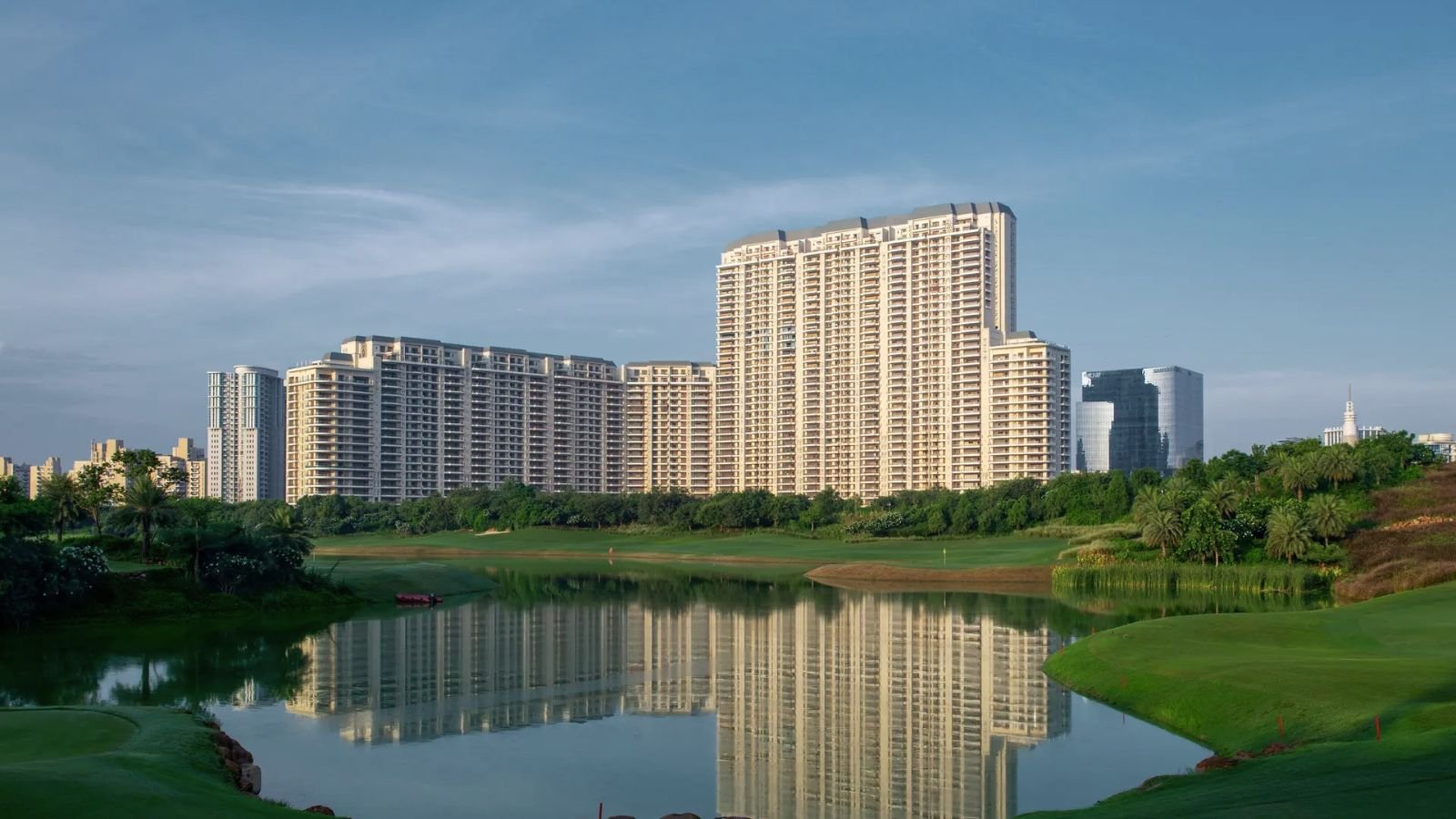
As of late 2026, this established corridor commands astronomical rates, largely driven by DLF’s flagship ultra-luxury ecosystem, which includes The Aralias, Magnolias, and The Camellias. While the massive monthly maintenance costs at DLF Camellias routinely make headlines across the corporate sector, executives willingly pay this premium precisely for the environmental management it buys.
Beyond just high-end finishing, a significant portion of this capital goes toward maintaining the sprawling, centralized green zones and advanced air-management infrastructure. These low-density, manicured green buffers act as natural pollution sinks. For corporate leaders who are already bypassing emissions bans with premium EVs to maintain their mobility, living in a heavily filtered, strictly managed DLF property is the ultimate defensive real estate strategy.
The Low-Density Appeal of DLF Phases 1–5
For families seeking clean air but unwilling to commit to high-rise living, the older, settled neighborhoods of DLF Phases 1 through 5 (including Sushant Lok) are experiencing a massive resurgence in legacy value.
Unlike the dense new construction happening along the Dwarka Expressway (where the local ecosystem is still emerging), these older sectors offer spacious independent floors and premium villas set within mature, tree-lined avenues. The established canopy cover in these neighborhoods provides a natural filtration system against the harsh winter weather in Gurgaon. Because these areas are fundamentally lower-density than the newer high-rise corridors, they experience less localized vehicular congestion and construction dust, creating a slightly more breathable micro-environment for families and long-term end-users.
Forecasting the 2027 Real Estate Market
As the weather in Gurgaon continues to dictate civic life through the winter months, real estate developers are rapidly pivoting their 2027 blueprints.
The “Clean Air Premium” means that future ultra-luxury projects will be marketed not on imported Italian marble or infinity pools, but on their fully enclosed, purified indoor recreational zones. Until the broader NCR environmental crisis is resolved, the most valuable asset in Gurugram’s real estate portfolio is no longer just square footage; it is the guarantee of clean, breathable oxygen.
