
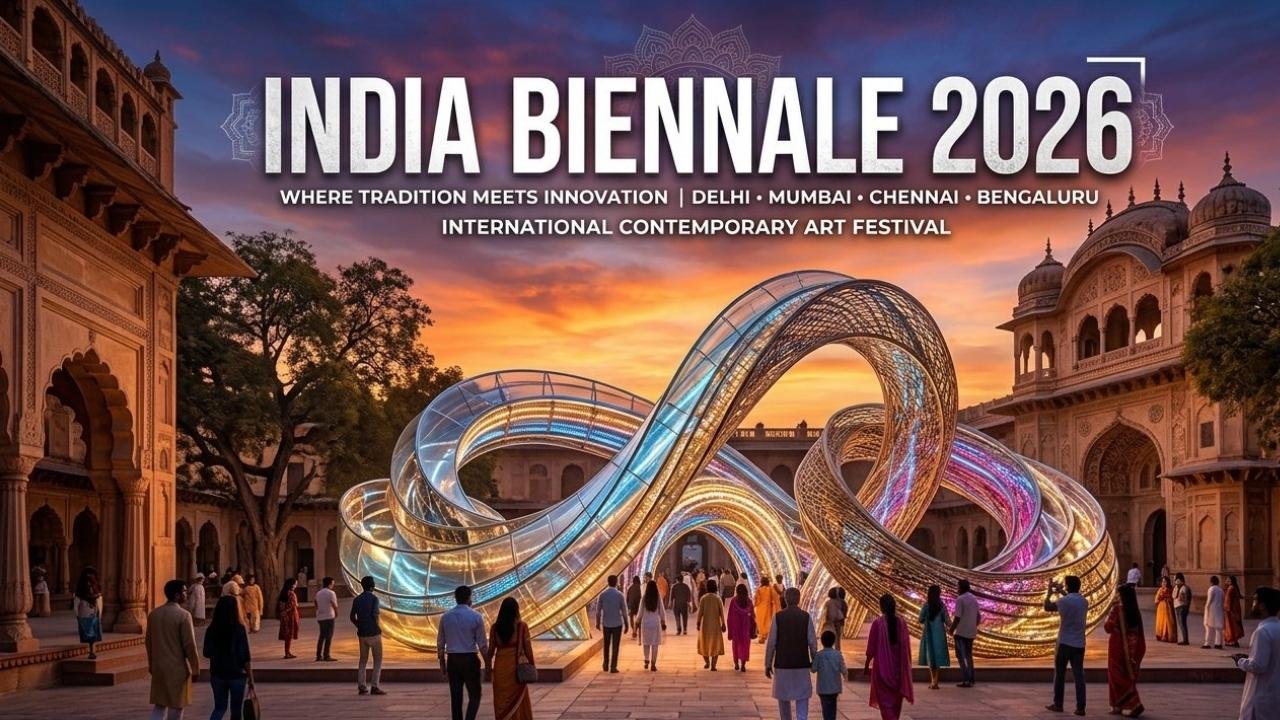
The India Biennale 2026: The Ultimate Insider’s Guide to Delhi’s Monumental Heritage Canvas
The national capital is turning into an open-air, city-wide art museum starting December 4, 2026, as The India Biennale ’26 (officially styled as the India Art, Architecture & Design Biennale) takes over Delhi’s most famous monuments, museums, and public spaces for 108 continuous days. Presented by the Ministry of Culture, Government of India, this grand multi-disciplinary cultural festival runs through March 21, 2027.
Curated around the profound Upanishadic core theme “Tat Tvam Asi” (You Are That), the festival addresses our fast-paced, screen-saturated lives by urging visitors to pause, reconnect, and see themselves reflected in art, architecture, design, and history. Whether you are an avid culture explorer checking out upcoming events in Delhi NCR or a curious local planning a weekend outing, this comprehensive guide covers everything you need to know about venues, tickets, free entry passes, transport, parking, dress codes, and food hacks.
What is The India Biennale 2026?
Following the success of its inaugural edition at the Red Fort in 2023, the 2026 edition scales up into a massive, city-wide cultural takeover under a unique public-private partnership model. Over 20 participating countries—including France, Italy, Switzerland, Hungary, and Sri Lanka—are bringing site-specific installations, heritage walks, design pavilions, immersive light projections, and living archives directly to Delhi’s iconic historical ruins and modern cultural galleries.
Instead of confining art to enclosed white-cube galleries, the Ministry of Culture has transformed the entire city into an interconnected cultural canvas. From ancient stepwells to Mughal fortresses and modern art institutions, heritage structures will host contemporary installations, architectural prototypes, and indigenous artisan displays.
Key Festival Overview: Dates, Venues & Timings
To help you navigate the 108-day celebration, here is a consolidated quick-reference matrix for planning your itineraries:
| Feature / Detail | Official Information |
| Event Name | The India Biennale ’26 (India Art, Architecture & Design Biennale) |
| Organiser | Ministry of Culture, Government of India |
| Curatorial Theme | Tat Tvam Asi – You Are That (Reconnecting in an Age of Distraction) |
| Dates | 4 December 2026 – 21 March 2027 (108 Days) |
| Primary Anchor Venue | Purana Qila (Old Fort) |
| Satellite Heritage Venues | Red Fort, Jantar Mantar, Qutub Minar, Humayun’s Tomb, Lodhi Garden, Hauz Khas Village, Mehrauli Archaeological Park, Agrasen Ki Baoli, Safdarjung Tomb, Sabz Burj, Firoz Shah Kotla |
| Institutional Hubs | IGNCA, NGMA, National Museum, Lalit Kala Akademi, Sangeet Natak Akademi |
| Visiting Timings | Monument hours: 10:00 AM – 6:00 PM |
| Official Ticket Portal | indiabiennale.culture.gov.in & ASI Monument Booking App |
Major Venue Highlights & Installations
Navigating a city-wide art festival can feel overwhelming, but focusing on the primary precincts guarantees an unforgettable cultural dive:
1. Purana Qila (The Festival Hub)
The epicenter of the Biennale features large-scale outdoor installations, the Bihar Museum Pavilion, the Nita Mukesh Ambani Cultural Centre (NMACC) exhibit, and international pavilions like the Swiss Embassy installation. If you want to explore more artistic hubs nearby, check out our guide to the top art galleries in Delhi NCR.
2. Red Fort & Jantar Mantar
Red Fort hosts historic narrative scrolls, including DAG’s 18th-century Mahabharata scroll and Cheriyal Scroll Paintings presented by Kalakriti Art Gallery. Meanwhile, Jantar Mantar transforms its astronomical stone instruments into backdrops for performance art, sound installations, and light projection shows.
3. Humayun’s Tomb & Lodhi Garden
Experience Archivio and Brother Wolf by the Italian Cultural Institute set against Humayun’s Tomb. Over at Lodhi Garden, the Gujral Foundation presents The Eternal Fold, seamlessly integrating sculptural art with lush green pathways.
4. IGNCA & Central Art Precincts
Indira Gandhi National Centre for the Arts (IGNCA), National Gallery of Modern Art (NGMA), and Lalit Kala Akademi host the Student Biennale, design forums, and masterclasses by global visionaries.
Free Passes, Tickets, and Passes Breakdown
Visiting individual heritage sites can accumulate entry fees, but the Ministry of Culture has streamlined access with single-window digital passes:
- The All-Access India Biennale Pass: A unified digital pass replacing individual Archaeological Survey of India (ASI) ticket counters across all participating venues.
- Free Entry Days & Student Passes: School children, fine arts students, senior citizens, and differently-abled visitors get 100% free passes upon registering with valid identification on the official portal or app.
- How to Reserve Free Tickets:
- Visit
indiabiennale.culture.gov.inor download the official India Biennale App. - Select your desired date, venue cluster, and entry slot.
- Enter your details and download the QR-code digital ticket directly to your smartphone.
- Visit
- Pro Tip: Keep an eye out for curated non-ticketed public outdoor exhibits around Central Delhi, which feature as part of our free weekend events in Delhi NCR roundup.
Transit & How to Reach the Venues
Because venues are spread across the city, relying on the Delhi Metro is the fastest, stress-free route:
- To Purana Qila & IGNCA: Deboard at Supreme Court Metro Station (Blue Line) or Khan Market (Violet Line), then take a 5-minute auto or e-rickshaw.
- To Red Fort & Jantar Mantar: Take the Violet Line to Lal Quila Station for Red Fort, or deboard at Janpath / Rajiv Chowk for Jantar Mantar.
- To Humayun’s Tomb & Lodhi Garden: JLN Stadium Metro Station (Violet Line) or Jor Bagh (Yellow Line) provide easy access.
- Inter-Venue Shuttle Buses: Free, branded electric shuttle buses connect key clusters (Purana Qila – IGNCA – NGMA – Humayun’s Tomb) at 20-minute intervals for valid pass holders.
If you are traveling in from neighboring hubs, you can easily take the Delhi-Karnal DTC AC Electric Bus Service directly into North Delhi to start your heritage trail.
Parking Guide & Traffic Hacks
Driving into heritage zones during peak winters can test anyone’s patience due to traffic restrictions. Here is where to park hassle-free:
- Purana Qila Cluster: Avoid parking directly outside the fort gates due to heavy construction and high traffic. Park at the designated multi-level facility at Pragati Maidan / IECC Parking (Gate 6) and walk or take the free shuttle.
- Red Fort Cluster: Utilize the Chandni Chowk Underground Multi-Level Parking or the DMRC parking lot at Red Fort Metro Station.
- Jantar Mantar & Central Hubs: Park at the NDMC Multi-Level Car Parking on Shivaji Stadium / Connaught Place.
- Best Parking Hack: Use app-based cabs or public transit when moving between central monuments to eliminate parking delays entirely.
Best Time to Visit & Insider Crowd Hacks
Winter in Delhi (December through February) provides clear skies and pleasant afternoon sun, making it ideal for exploring outdoor art.
- The Golden Morning Slot (10:00 AM – 12:30 PM): Best for clear light photography, quieter venue walks, and beating long queues at primary pavilions like Purana Qila.
- The Sunset & Illumination Slot (4:30 PM – 7:30 PM): Perfect for catching ambient outdoor light transitions, architectural light projections, and evening performance art sets.
- Weekday vs. Weekend Strategy: Weekdays (Tuesday to Thursday) offer a relaxed pace with up to 60% fewer crowds than weekends. Note: Most ASI monuments remain open daily, but institutional galleries like NGMA may observe Monday closures.
Food & Refreshments: What to Expect
While entry passes do not include complimentary sit-down dining, the event offers plenty of delicious food options across all venue zones:
- Pop-Up Artisan Food Courts: Purana Qila and IGNCA feature curated regional food stalls showcasing authentic cuisines from across India.
- Hydration & Complimentary Refreshment Kiosks: Free RO drinking water stations, eco-friendly tea/coffee counters, and complimentary herbal immunity shots are set up across major walkways.
- Nearby Dining: If you want a cozy cafe break between art walks, step out to explore the best aesthetic cafes in Delhi and Gurugram or grab a quick bite at hidden coffee spots nearby.
Recommended Dress Code & Essential Checklist
Exploring heritage sites involves walking across uneven stone pathways, lawns, and cobblestone courtyards. Keep these style and comfort tips in mind:
- Footwear: Wear cushioned sneakers, loafers, or sturdy flat walking shoes. Avoid high heels or stiff formal shoes.
- Attire: Smart-casual, breathable layered clothing. Winter mornings and evenings require a stylish jacket, pashmina shawl, or light trench coat.
- Aesthetic Tip: Earth tones, solid handloom fabrics, khadi, and minimalist outfits photograph beautifully against Delhi’s red sandstone and ancient brick masonry.
- What to Carry: A lightweight daypack, reusable water bottle, portable power bank, sunglasses, and a valid photo ID matching your digital pass.
Final Verdict: Why You Can’t Miss It
The India Biennale 2026 is a milestone celebration of creativity, heritage, and urban design. By opening up the capital’s iconic heritage architecture to contemporary global creators, it offers an immersive journey through India’s past and creative future. Mark your calendar for December 4, grab your passes early, and get ready to see Delhi in a whole new light!
