
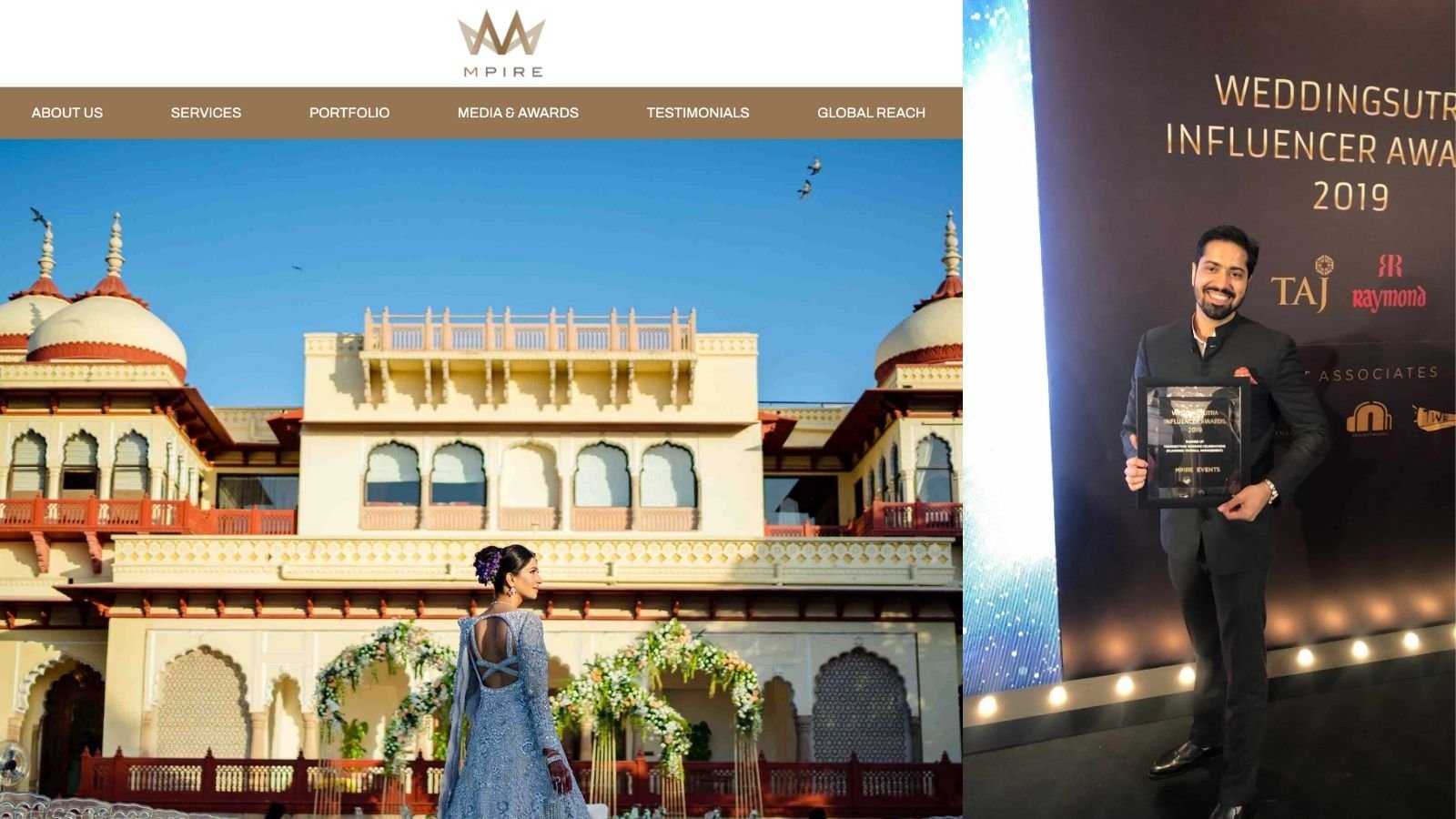
Tax Brunt Taking Big-Budget Weddings, Events Out of India: Vikram Mehta, Mpire Weddings
Editor’s Note (Archival Restoration — September 2026): This exclusive interview with Vikram Mehta, founder of Mpire Weddings, was originally published by The Optimist News on October 20, 2019. As part of our platform revitalization and archival preservation initiative, this industry report has been reformatted and restored to our active public record. It is featured as a media citation on the official Mpire Weddings platform.
Mpire Weddings and Events—India’s leading luxury wedding planners—is a boutique company that specializes in soirees and destination weddings. Mpire is known for its customized creations and spectacular settings, celebrating life’s most cherished occasions.
Credit for the concepts and creations goes to Vikram Mehta, owner-founder of Red Om Entertainment—India’s premier event and brand management agency. Mpire is the luxury arm of Vikram’s operations, planning, and logistics infrastructure. Team Optimist spoke to Mehta on his journey with Mpire Weddings, the shifting definition of luxury, and the tax policy changes needed to keep big-budget celebrations within the country.
The Evolution from Nightlife to Luxury Weddings
Team Optimist: How did you begin your journey with Mpire Weddings? What were your initial plans?
Vikram Mehta: For the first nine years of my event management career, I spent time working on events related to nightlife under my first company, Red Om Entertainment. We used to manage nightclubs across Mumbai, New Year’s events, concerts, international artistes’ tours, and so on.
I chanced upon weddings when I first managed the big day for a friend’s cousin. Since management came naturally to me, the overall concepts weren’t intimidating. It was my first tryst with the joys and pressures of working on the biggest day of someone’s life. One wedding led to another and then another—and that’s how wedding planning found me.
Mpire was founded as a separate entity with a fresh team, with careful attention to avoid overlaps with Red Om’s ongoing operations and market. Since Red Om happened when I was just out of college, I learned a lot from the mistakes I had made, and that made it easier for me to position and operate Mpire with stronger company values and protocols.
Re-defining Luxury Across Tier-1 and Tier-2 Cities
Team Optimist: How has the scenario changed for luxury Indian weddings over the past few years? Is it true for only metro cities, or even for Tier-1 and 2 cities?
Vikram Mehta: I think the general commercials (spending power of clients) change along with the country and world economy dynamics. More so, the definition of luxury weddings. What was extravagant earlier is considered tacky or garish now. Similarly, a destination—say Goa, or Bangkok—considered a luxury experience previously is considered a run-of-the-mill option today.
Luxury has also taken on a new meaning, with experiences being more important than just visual delights. So, you may see a couple spending less on décor and more on activities or an exotic locale.
It’s true for Tier-1 and Tier-2 cities as well. It just takes time for them to catch up. It’s like a fad which first begins with the metros and, through hearsay, eventually reaches the smaller ones—much like how broader trends spread across our lifestyle and culture coverage.
Digital Branding & Social Media Shift
Team Optimist: What are the basic challenges in brand management? Is digital branding the biggest focus for most brands these days?
Vikram Mehta: Print media is completely superfluous. Digital branding has slowly taken precedence over on-ground promotions and activities. It’s not only the biggest, but the only focal point for brands these days. That being said, your brand can only take you so far. While market positioning is imperative, weddings eventually work on word of mouth. There’s no bigger branding than a Happy Bride!
Some of the challenges I’ve faced in terms of brand management are:
- Evolving Platforms: Growing trends and changes in social media channels. For instance, Facebook has been replaced by Instagram, and Twitter by Pinterest. It’s important now to identify the most logical and relevant social media app and keep your handles updated there.
- Refreshing Content: Your content MUST change with seasons and trends. You may concentrate on bridal pictures for a long time, but you’ll need to mix things up and concentrate on décor, or entry and entertainment ideas. Similarly, your content should change in the monsoon and, again, in the peak season. Knowing when and what needs to be put out there in the market remains the biggest challenge.
- Unique Identity: Every company owner needs to identify his company’s ethos and style. The brand needs to reflect that. It’s important not to worry about what your competitors are positioned as. Once you look at a company’s online presence, you’ll be able to comprehend if it’s a young brand, a formal company, or a luxury specialist. If you’re able to communicate clearly to your brand managing team what you’re all about, it’ll reflect in your content and positioning.
Executing Weddings Worldwide: From Disney World to Hawaii
Team Optimist: What are Mpire’s focus areas now? What steps do you follow for such projects?
Vikram Mehta: Our targets and goals have slowly changed over time. We first concentrated on clinical delivery (quality). Once that was inbred in our systems, we moved on to large numbers and multiple weddings (quantity).
We’re currently at a stage where we set targets for destinations. We’ve always been recognized for our ability to execute anywhere in the world. This was the strength that helped us reach Disney World, Hawaii, and Hong Kong, among others. We now concentrate on destinations that are untapped, or even ahead of the times.
Revenue generation has never been the main focus area for Mpire. But we’re conscious of the value we add, which helps us charge fees that are equivalent to, or warrant, what we bring to the table.
We have a set template in terms of steps for projects:
- Locking the Venue: Securing the primary location first.
- Securing Core Partners: Locking important service providers.
- Project Allocation: Dedicating a project head from our office for each event.
- Creative Execution: Creating ideas, themes, and eventually planning the daywise macro flow of events.
We also incorporate fresh ideas and trends each season using the past season’s experiences.
Taxation, Licensing & The Investment Climate
Team Optimist: What do you think of the investment climate in India? What changes do you want from policymakers that’ll help entrepreneurs like you?
Vikram Mehta: The current climate isn’t ideal for weddings in India. It hasn’t been so for the past few years.
I think the taxation policy needs to be relaxed for entrepreneurs and 5-star hotels. These hotels are charged exorbitant tax amounts for room bookings, food, and beverage services. That’s eventually passed on to the client, and that’s a huge deterrent for families planning weddings in India.
The taxes on IMFL (Indian Made Foreign Liquor) are very high. People are afraid of buying alcohol at wine shops. This affects independent wine shop owners as much as our business.
There’s a whole bunch of licenses required to conduct any kind of music-related event in India. These are licenses formed by music labels and film industries, among others. Often, the cost of a DJ or singer is 1/4th the actual cost of the licenses required for them to perform. There’s a list of 17 licenses required to conduct a social event in India. This has reduced the number of international artistes invited to perform in our country. These licenses should either be abolished or put under a single-window scheme.
“In the current scenario, it’s cheaper to plan a wedding outside India than in one’s own city, even if it means booking rooms for guests to stay in that country.”
I think the tourism department could also take the initiative of encouraging more weddings in India. Small incentives for wedding planners and couples could go a long way. There’s a huge market in NRIs who love to come back to their roots for the biggest day of their lives—much like those seeking luxury events and hospitality showcases hosted within the capital.
The Road Ahead for Mpire Weddings
Team Optimist: What are your plans for Mpire Weddings?
Vikram Mehta: Our immediate plan is to enter new markets and tap pristine locations that have been untapped for a long time. From individual cities and countries, we’re now looking at continents that haven’t been explored.
We’d also like to make gradual progress into celebrity weddings, since we feel we have the resources and acumen to manage those.
We also spend a lot of time polishing our administration methods. We’re constantly renewing our systems, roping in fresh blood, refreshing templates for back-end work, and so on. This part will remain an ongoing process to always stay relevant—or ahead of the times!
