
DTC Launches AC Electric Bus Service on Delhi-Karnal Route: Check Stops, Fares, and Schedule
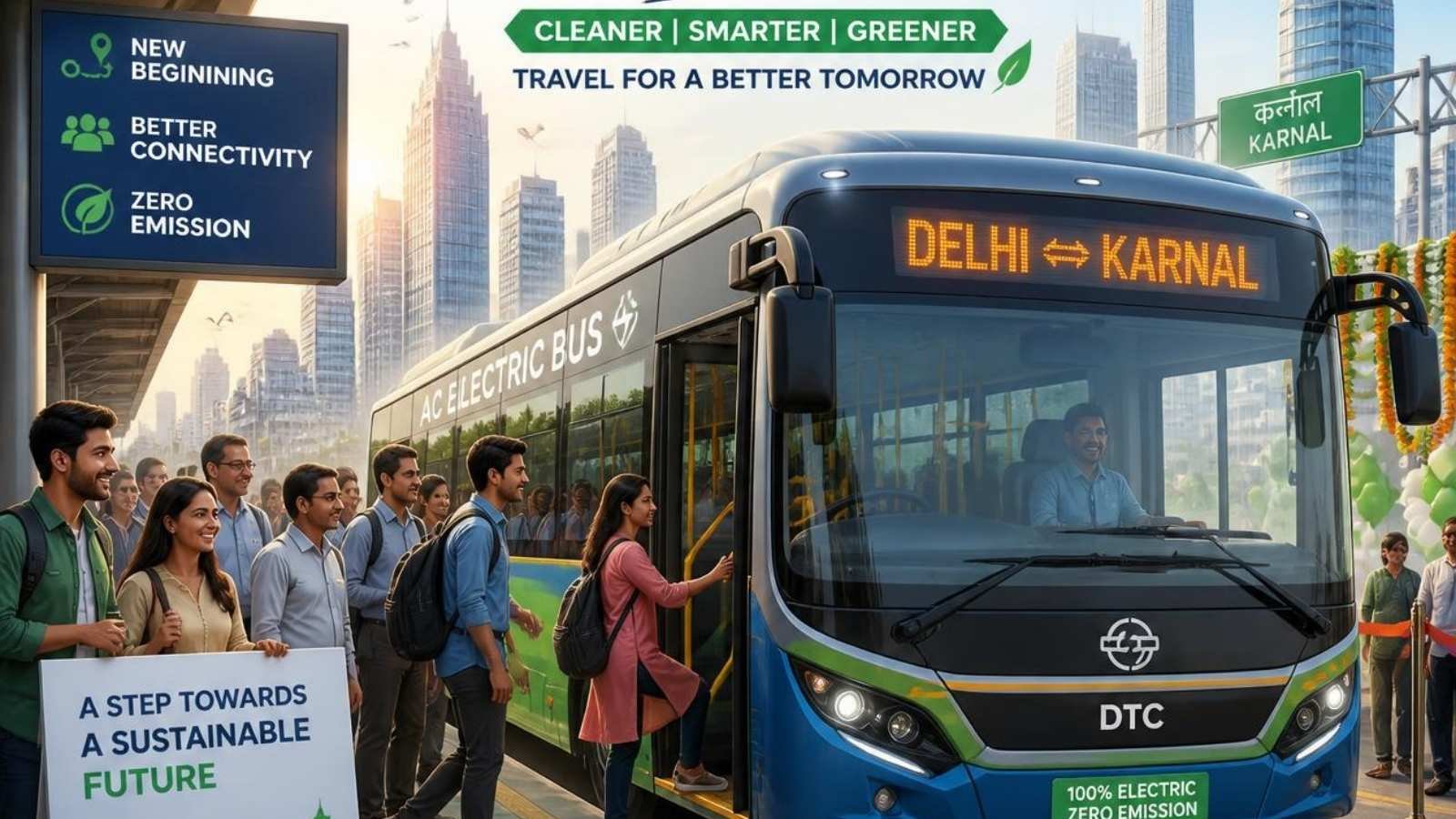
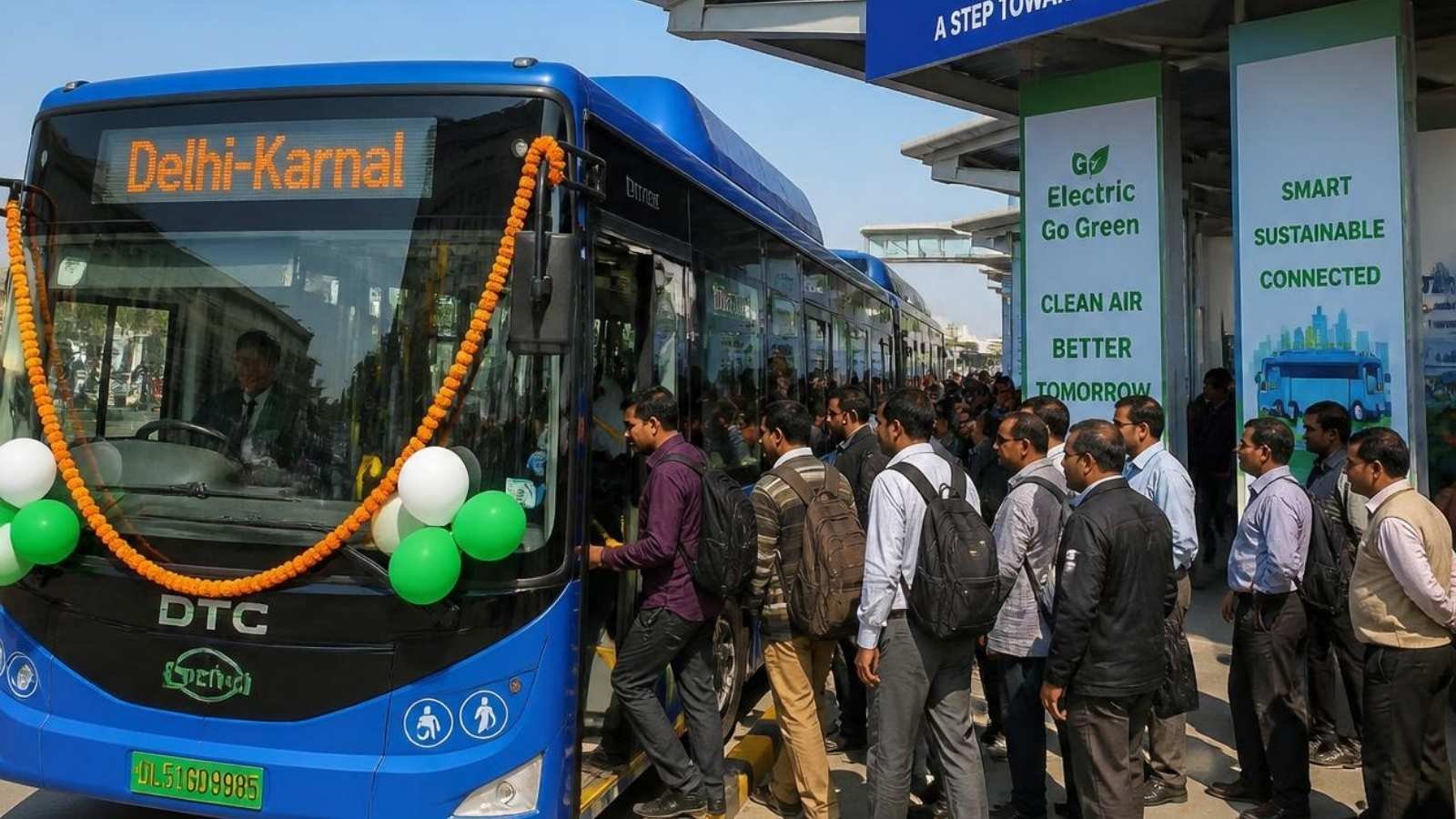
In a major milestone for regional public transit and sustainable mobility, the Delhi Transport Corporation (DTC) has officially launched an air-conditioned electric bus service connecting Delhi to Karnal. The inaugural service was flagged off jointly by Delhi Chief Minister Rekha Gupta and Lieutenant Governor Taranjit Singh Sandhu from the Delhi University Sports Complex.
Spanning a 133-kilometer one-way corridor, this zero-emission service stands among the longest interstate operations run by the DTC, surpassing long-standing intra-city circuits like the 105-km Outer Mudrika Service (OMS). The route provides an eco-friendly, comfortable, and cost-effective highway travel option for thousands of daily passengers moving between the national capital and northern Haryana.
Route Details, Halts, and Daily Timetable
The new route establishes a direct highway link between Maharana Pratap Interstate Bus Terminal (ISBT) at Kashmere Gate in Delhi and the central Karnal Bus Stand. To maximize utility for daily commuters, students, and factory workers, the buses make strategic stops along National Highway 44 (NH-44).
En-route halts include Singhu Border, Rai, Bahalgarh, Murthal, Gannaur, Samalkha, Panipat, Gharaunda, and Madhuban. Five low-floor electric buses run ten single trips daily (five from Delhi and five from Karnal), with a full travel duration ranging between 3.5 and 4 hours depending on highway traffic.
| Transit Parameter | Operational Details & Route Metrics |
| Origin & Terminal | Maharana Pratap ISBT (Kashmere Gate) to Karnal Bus Stand |
| Total Route Distance | ~133 km (One-Way Interstate Corridor) |
| Ticket Fare | ₹250 flat fare per passenger (full one-way journey) |
| Delhi Departures | Morning: 06:00 AM, 08:30 AM | Afternoon: 12:00 PM, 03:30 PM | Evening: 06:30 PM |
| Karnal Departures | Morning: 05:30 AM, 07:00 AM | Afternoon: 11:30 AM, 02:00 PM | Evening: 05:00 PM |
| Key Intermediate Halts | Singhu Border, Rai, Murthal, Samalkha, Panipat, Madhuban |
| Fleet Infrastructure | Low-floor AC electric buses with Lithium-ion battery packs |
How to Book Tickets, Boarding Bays & Live Tracking Apps
Passengers can book seats and locate buses through multiple digital and offline channels:
- Boarding Platforms at ISBT: Electric buses to Karnal operate primarily from Platform Numbers 58 and 59 inside the departure zone of Kashmere Gate ISBT (with alternate regional operations near Platform 54). Passengers arriving via the Delhi Metro should exit through Metro Gate No. 8 for direct access to the bus bays.
- On-Board Conductor Ticketing: Passengers can buy tickets directly inside the bus using Electronic Ticketing Machines (ETIMs) operated by the conductor. Payments are accepted via cash, UPI QR codes, or NCMC-enabled debit/credit cards.
- Official Live Tracking Apps:
- One Delhi App: The official Delhi Government app provides real-time GPS tracking, estimated arrival times, and a 10% discount on e-tickets generated via the app.
- Chartr App: Widely used across Delhi for e-ticketing and live route tracking on DTC vehicles.
- Tummoc & Moovit: Integrated multi-modal transit platforms providing real-time countdown alerts and route maps.
Fare Rules, Senior Citizen Policies, and Pass Exemptions
Because this service operates as an interstate express route, specific fare concession rules and pass exemptions apply:
- Women Commuters (Pink Ticket Scheme): Free travel under the Pink Ticket / Pink Saheli scheme applies strictly within Delhi NCT geographical borders. Once the bus crosses into Haryana, female passengers must purchase the standard passenger ticket.
- Senior Citizens (60+ Years): DTC senior citizen concessional passes are valid only for intra-city Delhi routes. Senior citizens traveling on the Delhi-Karnal route pay the standard ticket fare, though priority front-row seating is reserved on board.
- Children’s Fare Policy: Children under 5 years of age travel free of cost without a separate seat allocation. Children aged 5 years and above require a full passenger ticket.
- Pass Validity Exceptions: Regular DTC daily Green Cards, student passes, and monthly city AC passes are not valid on this long-distance interstate route.
Vehicle Technology, Battery Range, and Night Operations
The low-floor electric buses are engineered for medium-range interstate travel. High-capacity Lithium-ion battery packs deliver an operational range of 180 to 200 kilometers per single charge, comfortably completing the 133-km route with safe power reserves.
While the Delhi Transport Department operates an internal night-bus network (N-series) within city limits, this interstate route runs strictly during daytime hours, with the final daily departure scheduled at 06:30 PM from Kashmere Gate. Every vehicle includes a panic button network, real-time GPS tracking, 360-degree CCTV surveillance, and manual boarding ramps for wheelchair accessibility.
On-Board Experience & Commuter Realities
Early passengers and regular highway commuters highlight several key aspects of traveling on the new EV fleet:
- Silent & Climate-Controlled Cabin: The absence of engine noise and heavy mechanical vibration creates a quiet cabin environment, paired with powerful air conditioning that effectively counters highway heat and dust.
- Low-Floor Accessibility & Amenities: Low-floor steps facilitate easy boarding for elderly travelers and passengers carrying luggage. Interiors feature seat-side USB charging ports and digital stop displays.
- Highway Smoothness & Murthal Route: The smooth electric acceleration significantly reduces motion sickness along GT Road, offering a comfortable ride through major food hubs like Murthal.
- Enhanced Safety Perception: Dedicated CCTV coverage and panic buttons provide added security, particularly for solo female travelers during peak morning and evening journeys.
- Travel Realities: Seats fill up quickly during peak hours, meaning standing commuters may find long highway stretches tiring. Travelers are also advised to keep personal belongings secure while navigating busy transit hubs like Kashmere Gate.
Deploying zero-emission buses on heavy interstate routes supports the broader clean energy transition, helping curb severe winter pollution levels across the National Capital Region. This expansion aligns with long-term urban planning goals set under the Delhi Master Plan framework to establish sustainable transit corridors across North India.
