
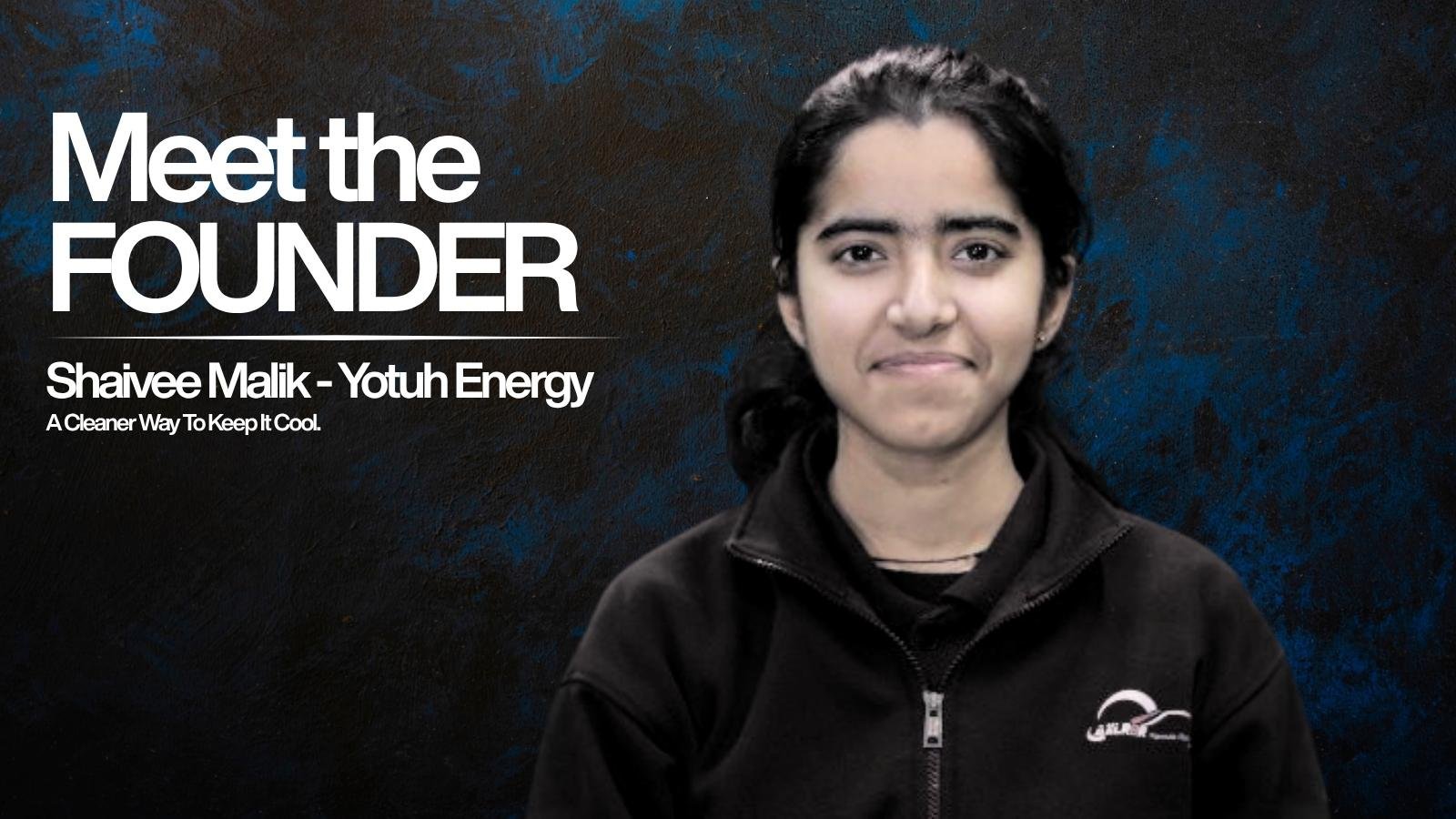
From Formula Racing to Climate-Tech: How 25-Year-Old IIT Delhi Alum Shaivee Malik is Revolutionizing India’s Cold Chain
India’s agricultural and supply chain sectors lose millions of tons of perishable goods every year due to inadequate cold storage and transport infrastructure. Traditional refrigerated trucks rely heavily on the vehicle’s diesel engine to power cooling units—burning massive amounts of fuel, emitting high carbon levels, and failing entirely when the truck is stuck in stationary traffic or gridlocked highways.
Enter Shaivee Malik. At just 25 years old, this IIT Delhi biotechnology graduate is turning an everyday logistical nightmare into a thriving climate-tech solution.
As a shining example of the rising wave of young innovators—much like the brilliant minds driving change at the IIT Delhi Gender Equity Initiative and the young women entrepreneurs reshaping the startup landscape across Delhi-NCR—Shaivee is proving that engineering prowess can directly combat climate change.
The Pit Stop: From Race Cars to Real-World Solutions
Long before she started designing green logistics, Shaivee was busy building high-speed electric vehicles. During her time at IIT Delhi, she immersed herself in the institute’s premier Formula Racing team, Axlr8r, serving as its associate team captain.
Working alongside her future co-founders, Vivek Mahindrakar and Dharmik Bapodara, the trio designed, developed, and tested formula-style single-seater electric race cars capable of going from 0 to 100 km/h in just 3.5 seconds. Those late nights sleeping in the college garage laid the exact foundation needed to run a fast-paced hardware startup and tackle India’s transport logistics.
Founding Yotuh Energy: Innovation on Wheels
In 2022, the trio launched Yotuh Energy—a name derived from the Sanskrit word for “cleansing” or “purifying,” reflecting their mission to clean up the carbon-heavy logistics sector. While initially registered in Delhi, the team rapidly moved south after being accepted into the world-class startup ecosystem at the IIT Madras Incubation Cell.
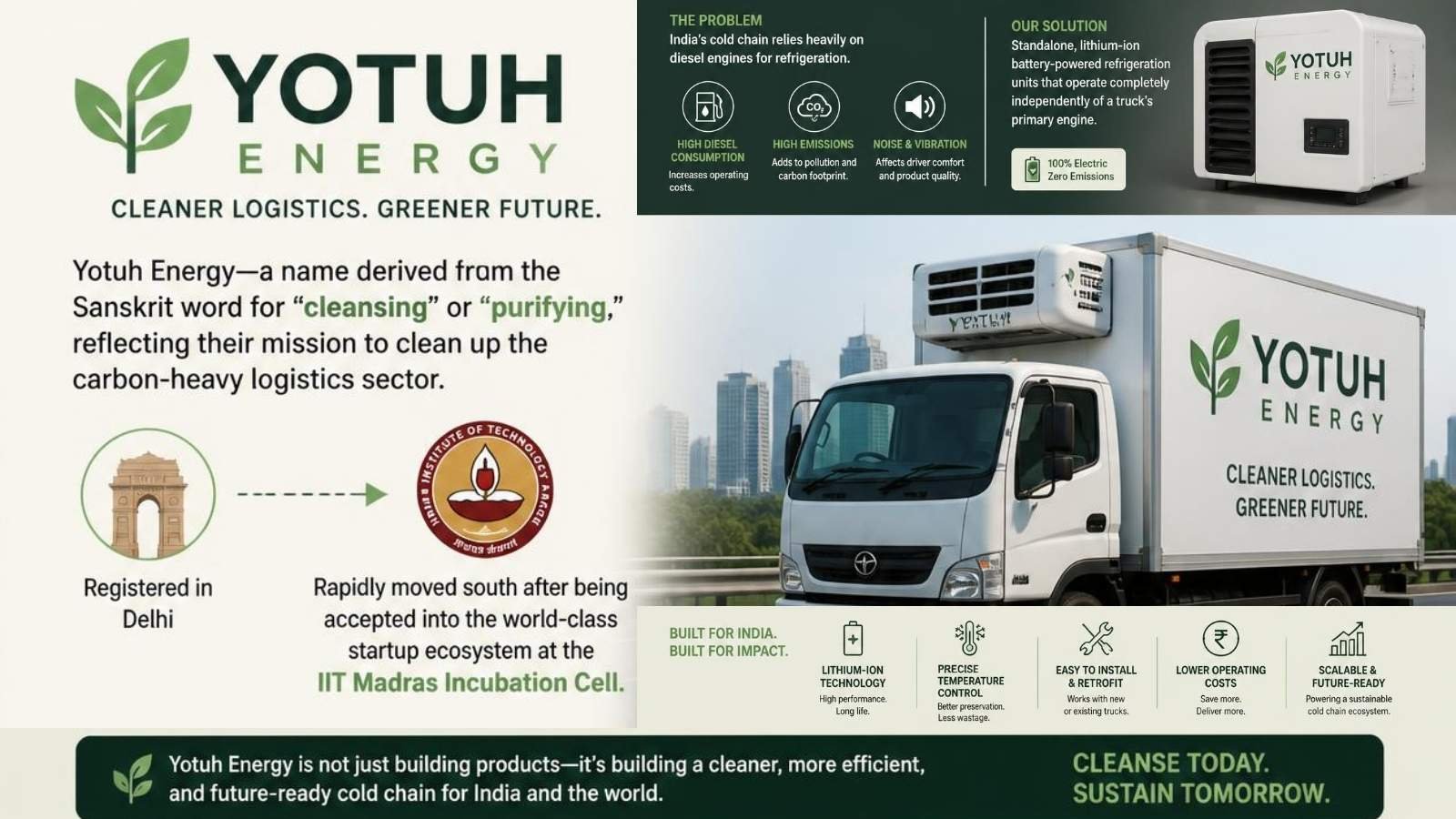
The startup set out to solve a glaring flaw in India’s cold chain: the reliance on diesel engines for refrigeration. Yotuh Energy developed standalone, lithium-ion battery-powered refrigeration units that operate completely independently of a truck’s primary engine.
Key Technical Features:
- Stationary Cooling: The system keeps cargo safely chilled even when the truck engine is turned off, gridlocked in traffic, or experiencing a mechanical breakdown.
- Smart Door Sensors: Built-in automated sensors track every time a truck’s cargo doors open, instantly adjusting internal cooling cycles to prevent power drain.
- Battery Endurance: The units run efficiently for 6 to 8 hours on a single charge and can fit onto existing diesel fleets (like the Tata Ace) or modern electric vehicles.
- Massive Cost Reductions: The technology slashes active refrigeration running costs by an impressive 75%.
The Industry Shift: Diesel vs. Yotuh Battery Systems
| Feature | Traditional Diesel Refrigeration | Yotuh Energy Battery System |
| Power Source | Linked to the truck’s main diesel engine | Independent Lithium-Ion Battery |
| Traffic Impact | Burns excessive diesel while idling in traffic | Zero idle fuel consumption |
| Operating Cost | High (Fluctuating fuel prices) | 75% Lower (Electric charging) |
| Carbon Emissions | Heavy localized pollution | Saves 3 to 36 metric tons of CO2 annually |
| Vehicle Compatibility | Large commercial trucks only | Fits small intra-city vehicles & EVs |
Scaling Up: From Grassroots Grants to Major Brands
What began with family support and early government stipends has transformed into a heavily backed commercial success story. Yotuh Energy recently closed a 1.53 Crore seed funding round led by the Campus Angels Network, alongside backing from the Ministry of Agriculture and the Department of Science and Technology (DST). This trajectory closely mirrors other successful tech ventures we have covered, such as Aditi Sinha’s Locale.ai, proving that scalable tech solutions can attract serious capital.
Today, their sustainable cooling units are deployed by transport logistics providers serving major Indian household food brands, including Amul Ice Cream and McCain Foods.
A Blueprint for Women in Climate-Tech
Being a young woman in the heavily male-dominated logistics sector is no easy feat. In an initiative supported by UNDP in India and aligned with broader national goals like the women empowerment schemes in India, Shaivee spoke candidly about her mission and the hurdles she overcame:
“In India, just 4% of perishable goods are transported in correct refrigeration transportation… With the current solution, we are not just navigating the existing 80,000 reefer trucks in India, but with reduced cost of transportation, we also tend to penetrate the ground level and make refrigeration accessible and affordable for all. Being a woman entrepreneur and entering into an unorganized sector, collecting data about the ground logistics was extremely challenging. Being in this cohort has helped us consider the impact on our business together, unlike the conventional strategy of keeping business at the mainstream and impacts on the other side.”
Shaivee’s journey from building race cars in an IIT workshop to cutting carbon emissions in commercial transport highlights a vital truth: India’s youth are not just waiting for systemic change; they are engineering it themselves.
