
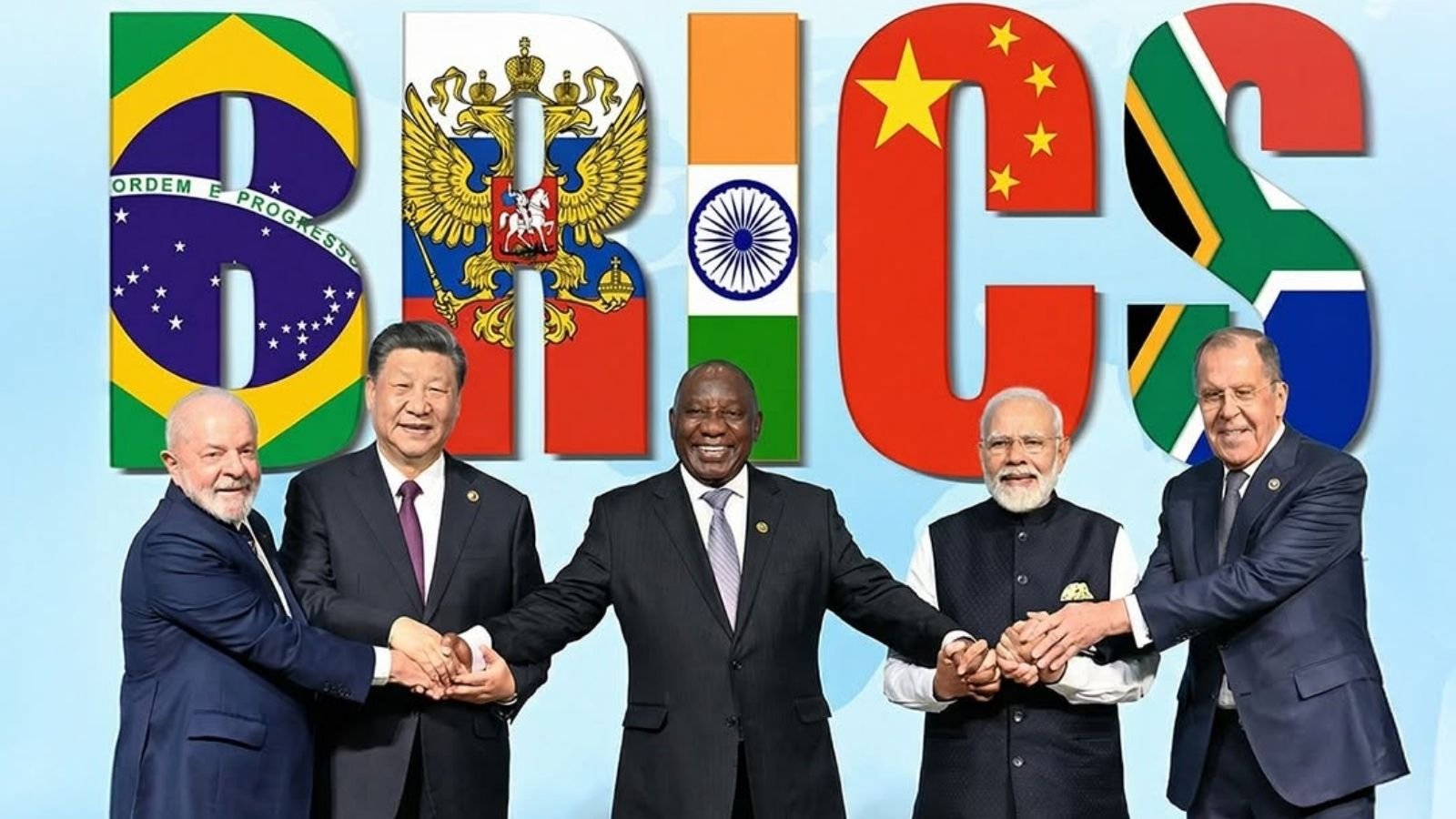
How the 18th BRICS Summit Positions India as a Global Powerhouse
NEW DELHI — September has proven to be a defining month for the National Capital Region. While lifestyle and cultural enthusiasts are gearing up for autumn blockbusters like The Grub Fest 2026 and the sprawling beauty hangars of Nykaaland 4.0, a tectonic geopolitical shift was silently unfolding at Pragati Maidan.
The 18th BRICS Summit at Bharat Mandapam (September 12–13, 2026) has officially concluded with the historic, unanimous adoption of the New Delhi Declaration. Marking the 20th anniversary of the bloc, India successfully steered the expanded 11-nation network toward unified resolutions. By effectively balancing rival powers, New Delhi firmly positioned itself as the irreplaceable bridge between the Global South and Western economies through its “Humanity First” foreign policy agenda.
Beyond the handshakes and photo-ops, the summit delivered masterclasses in diplomatic maneuvering, technology sovereignty, and economic pragmatism. Here is the exclusive breakdown of what the 18th BRICS Summit actually achieved—and what the headlines missed.
The “Strategic Silence” Paradox
While mainstream headlines focused on the successful joint statement, the real geopolitical story lies in what the BRICS leaders deliberately left unsaid.
- The Ukraine & Iran Omissions: Despite Russian President Vladimir Putin and Iranian President Masoud Pezeshkian actively advocating for “genuine multilateralism,” the final text of the New Delhi Declaration completely avoided condemning the United States or even mentioning the word “Ukraine” in a hostile context.
- The Middle East Tightrope: The declaration called for maximum restraint in the Middle East and expressed opposition to the forced displacement of Palestinians, yet it carefully sidestepped directly naming or condemning US-led or Israeli military strikes.
The Diplomatic Cloak of Neutrality: To prevent the 11-member bloc from fracturing over massive ideological splits, India engineered a language architecture where member nations agreed to dilute their own geopolitical grievances to protect a shared, highly lucrative economic agenda.
Debunking the Myth: The Truth About the “BRICS Banknote”
Social media timelines have been flooded with images of a newly printed “BRICS Banknote” and rumors of a unified currency designed to overthrow the US Dollar. This is completely false.
There is no official BRICS currency, and the “banknotes” seen online are merely symbolic mementos created for past forums. Following the New Delhi Summit, the Ministry of External Affairs explicitly ruled out the creation of a common BRICS currency.
Why India Rejected a BRICS Currency:
India completely blocked the creation of a unified currency because it has zero interest in a radical “de-dollarization” revolution. India heavily relies on stable, massive trade corridors with the US and Europe and refuses to jeopardize them.
The Real Financial Plan:
Instead of a single currency, BRICS is upgrading payment interoperability. The goal is to connect existing national banking networks and Central Bank Digital Currencies (CBDCs). This codified framework for voluntary local-currency trade settlements allows an Indian business to pay a Brazilian or South African vendor directly in Rupees, bypassing the US dollar solely for specific bilateral transactions while preserving vital foreign exchange reserves.
The Weaponization of Tech & India’s Counter-Strategy
During the concluding sessions, Prime Minister Narendra Modi introduced a powerful, double-edged warning against the “weaponization of technology and critical minerals.”
- The Hidden Target: This warning was directed at both the West (pushing back against semiconductor sanctions) and China (challenging Beijing’s absolute dominance over rare-earth elements and solar supply lines).
- The Tech Sovereignty Race: In response, China immediately announced a new “BRICS Open AI Source Community” to try and capture leadership in Global South artificial intelligence.
- India’s Counter-Move: India is aggressively utilizing its Digital Public Infrastructure (DPI) to check China’s ambitions, ensuring the “Greater BRICS” does not simply become a Beijing-dependent technology ecosystem.
India’s Four-Pillar Strategic Framework: Final Deliverables
The MEA confirmed that the summit was the culmination of over 400 engagements across 30 Indian cities. Here are the final deliverables categorized by India’s strategic pillars:
| Strategic Pillar | Core Focus | Final Summit Deliverables & 5-Year Outlook |
| Resilience | Supply Chain Security | Signed the Critical Minerals Resilience Pact to insulate semiconductor and green energy tech from market shocks. |
| Innovation | Digital Infrastructure | Formalized the BRICS DPI Export Framework, standardizing India’s UPI and digital ID blueprints for global adoption. |
| Cooperation | Multilateral Reform | Issued a unified demand for structural changes in the UN Security Council, IMF, and World Bank. |
| Sustainability | Green Transition | Operationalized the BRICS Solar MSME Incubator Network and created a joint disaster relief fund. |
The Middle East “Olive Branch”
While Western media often views BRICS as an anti-Western monolith, the sidelines of the New Delhi Summit transformed into a highly unexpected de-escalation venue for West Asia.
The most significant diplomatic breakthrough occurred between Iran’s President Pezeshkian and the UAE’s Crown Prince, Sheikh Khaled bin Mohamed Al Nahyan. Despite UAE bases previously being caught in regional crossfires, Iran’s president explicitly offered a truce. This positioned BRICS as a legitimate, alternative forum for regional rivals to negotiate security outside of Western-mediated channels.
Local Impact: How the Summit Reshapes Delhi-NCR & Gurugram
While citizens navigated tight security zones over the September 12–13 weekend, the long-term economic gains for the National Capital Region are monumental.
- Urban Infrastructure Accelerations: Key logistics hubs and the integration of the Urban Extension Road-II (UER-II) with the Airport Express Line were expedited to accommodate summit timelines, structurally advancing Delhi’s Master Plan 2047.
- Gurugram’s Clean-Tech Boom: Under the newly launched Action Plan for the Photovoltaic Industry, Gurugram has been designated as the key administrative node for the new BRICS Startup Fund. This will attract massive regional clean-tech venture capital directly into the NCR ecosystem—further elevating the corporate stature of executives driving multi-crore real estate deals in rapidly rising luxury hubs like Sector 63A, many of whom are already tracking these global market shifts on premium devices like the newly launched iPhone Duo.
The 5-Year Roadmap (2026–2031): What’s Coming Next?
The New Delhi Declaration has laid down an actionable, ambitious blueprint for the Global South over the next five years:
- The BRICS Cross-Border Digital Health Protocol (2027): Standardizing secure, AI-driven digital health data sharing to counter future global health crises and coordinate immediate disaster responses.
- Unified Solar Grid Interconnection (2028–2029): Developing physical and regulatory cross-border power transmission protocols, heavily utilizing Indian solar manufacturing ecosystems to champion sustainability—a vision aligned with the green initiatives led by dedicated bureaucrats like IFS officer Sudha Ramen.
- Alternative Global Credit Rating Agency (By 2030): Active policy frameworks have been set in motion to design a parallel, non-Western credit rating system to unlock cheaper capital for infrastructure projects across developing nations.
Hosting the 18th Summit was a masterstroke in preventing Chinese dominance of the platform while amplifying the voice of the Global South. By securing domestic interests—such as establishing a BRICS Risk Lab in GIFT City and a BRICS Grain Exchange—India proved that its economic diplomacy is not just surviving the current geopolitical storm, but actively reshaping the global order.
