
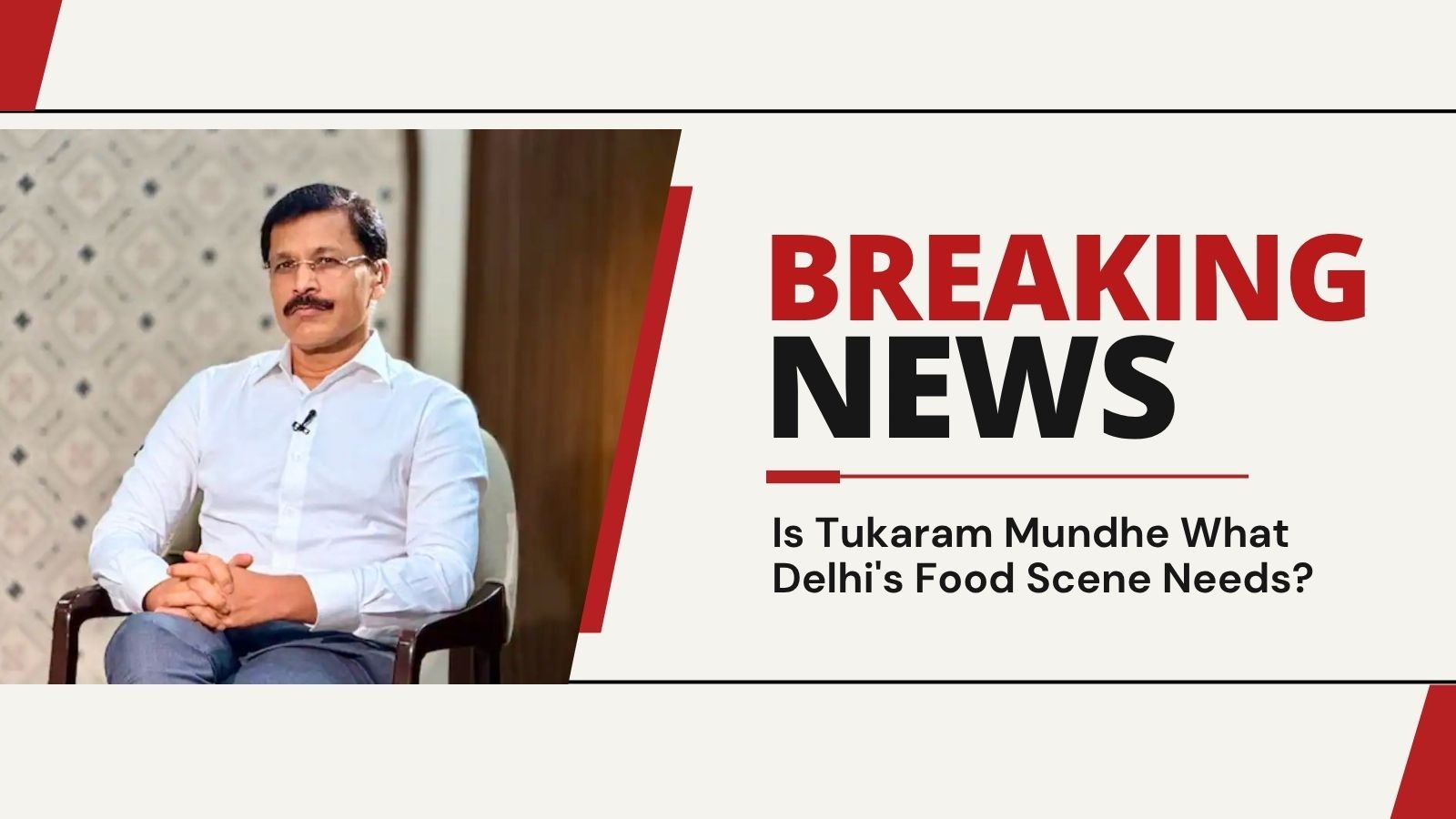
“Need a Tukaram Mundhe in Delhi”: How Maharashtra’s FDA Sweeps Are Sending Shockwaves Through NCR Dining
Across social media platforms in the capital, a common sentiment is trending among exasperated diners: “We need a Tukaram Mundhe in Delhi.”
As Maharashtra’s Food and Drug Administration (FDA) Commissioner, the uncompromising 2005-batch IAS officer has unleashed a zero-tolerance crackdown on commercial food hygiene. From sealing quick-commerce warehouses to forcing the closure of the Bombay High Court’s own internal canteens until they met mandatory standards, Mundhe’s 2026 sweep has proven that no brand, VVIP, or institution is immune.
While Mundhe’s jurisdiction is strictly confined to Maharashtra, the psychological shockwaves of his raids are quietly triggering a massive operational cleanup nearly 1,500 kilometers away in the commercial kitchens of Delhi, Gurugram, and Noida.
The Gurugram HQ Connection: Deterrence by Proxy
Why are Delhi-NCR restaurateurs sweating over a bureaucrat in Mumbai? The answer lies in corporate geography.
Gurugram’s Cyber City and Noida’s Sector 62 serve as the corporate headquarters for India’s largest quick-service restaurant (QSR) chains, cloud kitchen aggregators, and FMCG supply chains. When a global fast-food outlet or a mega-warehouse is raided and sealed in Thane or Navi Mumbai, the crisis management happens in an NCR boardroom.
Fearing the PR disaster of a “Mundhe raid,” NCR-based corporate executives are proactively forcing stringent, unannounced internal audits on their own outlets across Delhi’s Aerocity, Khan Market, and Gurugram’s Golf Course Road. It is classic regulatory deterrence by proxy: kitchens are cleaning up not because local inspectors are at the door, but because the national benchmark for compliance has suddenly been radically elevated.
The Shadow of 25+ Transfers
For NCR businesses, the fear isn’t just about Maharashtra—it’s about the political reality of the Indian bureaucracy. Officers who act strictly in the public interest frequently face administrative reshuffles.
Tukaram Mundhe has built a legendary, viral reputation precisely because he refuses to bend to political or corporate pressure, resulting in over 25 transfers throughout his career. For NCR food operators, this track record serves as a stark warning: a sudden bureaucratic reshuffle could easily place a similarly uncompromising “Singham” at the helm of Delhi’s food safety department overnight.
Tukaram Mundhe: A Timeline of High-Profile Crackdowns & Transfers
| Year | Administrative Posting | The Legacy / Reason for Friction |
| 2014 | District Collector, Solapur | Cracked down heavily on the local sand mafia and illegal land encroachments. |
| 2016 | Municipal Commissioner, Navi Mumbai (NMMC) | Suspended corrupt officials and demolished illegal structures, surviving a political no-confidence motion backed by the public. |
| 2017 | CMD, Pune Mahanagar Parivahan Mahamandal (PMPML) | Fired absentee drivers, maximized bus fleet efficiency, and dismantled union monopolies. |
| 2018 | Municipal Commissioner, Nashik (NMC) | Overhauled property tax collections and strictly enforced civic discipline, leading to rapid political pushback. |
| 2020 | Municipal Commissioner, Nagpur (NMC) | Led a ruthless, highly effective COVID-19 lockdown containment strategy, clashing with local politicians over strict enforcement. |
| 2022 | Commissioner, National Health Mission (NHM) | Busted internal health department irregularities; transferred within two months of taking charge. |
| 2026 | Commissioner, Maharashtra FDA | Shut down High Court canteens, global QSRs, and unhygienic cloud kitchens, launching the viral AI citizen-reporting portal. |
The New Threat: AI and Citizen Surveillance
Beyond physical raids, Mundhe has introduced a technological threat that has NCR businesses on edge: an AI-powered portal allowing everyday consumers to report unsafe food via a simple, multi-lingual voice note.
Because this public accountability model is highly scalable and cost-effective, premium dining sectors in Delhi foresee a near future where local authorities like the FSSAI adopt similar automated escalation systems.
For the food and beverage industry in Delhi-NCR, the “Mundhe Effect” has cemented a new operational reality. Raising hygiene standards is no longer just a box to check before an annual routine inspection; it is fundamental risk management. They are preparing today for the inevitable day an uncompromising officer decides to take over their territory.
