
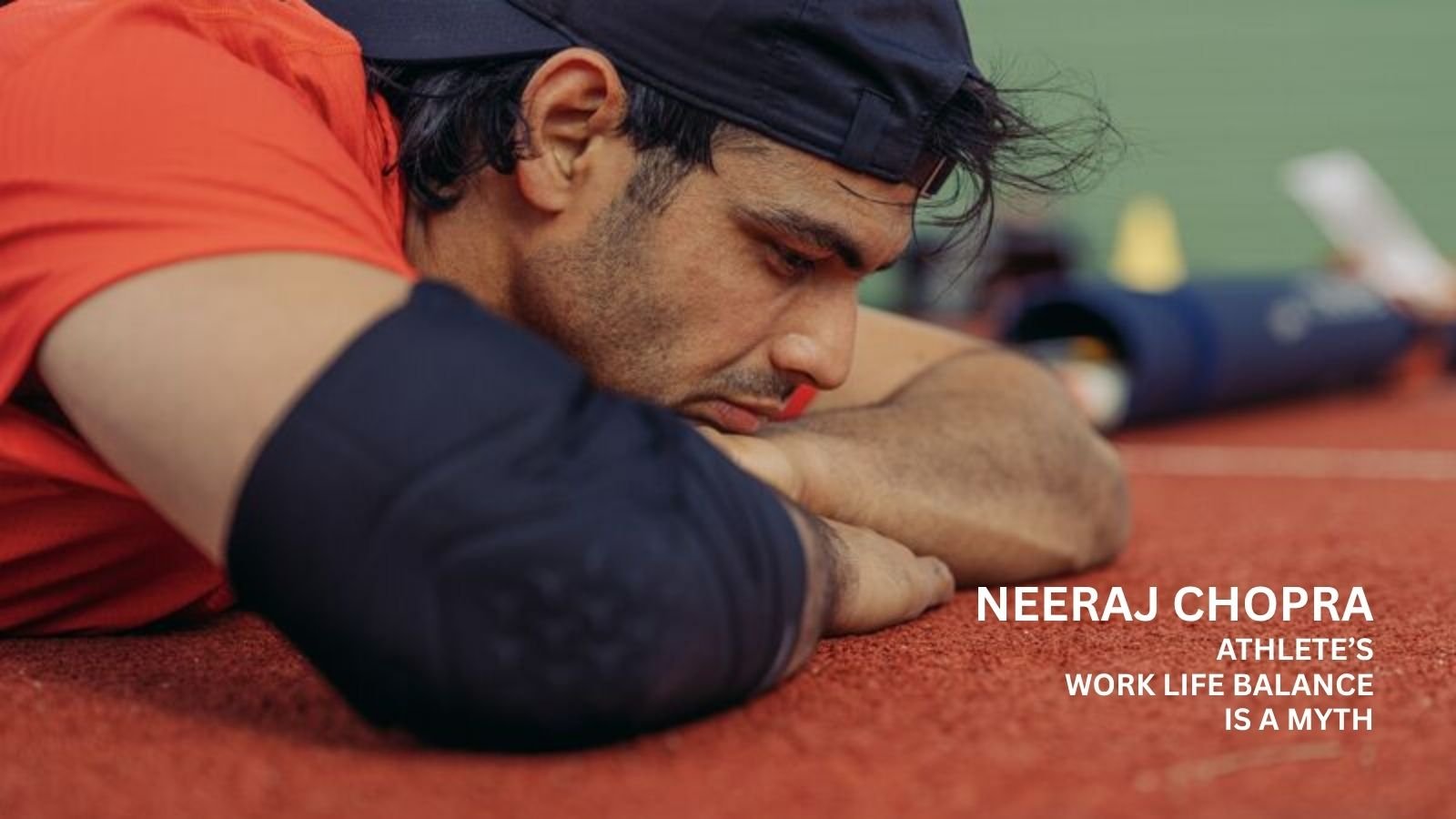
The Myth of Athlete Work-Life Balance: What Neeraj Chopra’s Forced Pause Teaches Us About Recovery
When Olympic champion Neeraj Chopra suffered a severe ankle ligament tear during training in late August 2026, it brought his season to a jarring halt. The injury forced him to withdraw from marquee events, including the Asian Games in Japan and the Diamond League Final.
However, rather than retreating into silence during his rehabilitation, Chopra took to LinkedIn to address the psychological toll of his injury. In doing so, he challenged a favorite corporate buzzword: work-life balance.
“I’m not sure if an athlete relates to what people in this space call work-life balance,” Chopra noted. “The sport we sign up for dictates the rest of our lives, and that is our idea of balance. It’s not simple, but it’s perfect.”
For high-performing athletes, the obsession is the equilibrium. The standard paradigm of clocking out at 5:00 PM does not exist when your physical body is your life’s work. The disruption only comes when the body finally forces a negotiation.
The Tokyo Gold and a Cultural Revolution
To understand the weight of Chopra’s current setback, one must look at the monumental shift he triggered in Indian sports. When Chopra won Gold at the Tokyo 2020 Olympics (held in 2021), he did more than secure a medal; he permanently altered the nation’s sporting culture.
Before his historic throw, javelin was an obscure track and field event in the subcontinent. After his victory, athletic complexes across Delhi-NCR and the broader country reported a massive surge in enrollment. Students who previously only connected with cricket began picking up javelins, and state governments accelerated the development of dedicated sports infrastructure to nurture this grassroots enthusiasm.
This systemic evolution has been heavily sustained by the Sports Authority of India (SAI) and the Target Olympic Podium Scheme (TOPS), which fully funds Chopra’s global training camps, local logistics, and advanced coaching. This level of institutional backing is crucial for translating individual brilliance into long-term systemic success—a concept echoed in Anil Swarup’s perspective on making things happen on the ground.
The Coaching Evolution: From Bartonietz to Chaudhary
Chopra’s dominance is rooted in his willingness to constantly evolve his technical approach through strategic coaching partnerships.
| Timeframe | Head Coach | Major Milestones |
| 2019 – 2024 | Dr. Klaus Bartonietz | Tokyo 2020 Olympic Gold, Paris 2024 Olympic Silver, Diamond League Champion. |
| 2025 | Jan Železný | Breaching the 90m barrier at the Doha Diamond League. |
| 2026 (Current) | Jai Chaudhary | Reuniting with his formative childhood coach to refine technical consistency ahead of the Asian Games. |
Heading into the 2026 season, Chopra’s reunion with his first coach, Jai Chaudhary, was designed to sharpen his physical conditioning at overseas training bases in South Africa. The strategy was flawless until his body forced a pause.
(For a deeper look into official athletic records and international tournament schedules, visit the Olympics Official Coverage Portal.)
Leveraging “Pain and Time”
“Sometimes it breaks your bones. Other times it breaks your courage, your hope, and also your balance,” Chopra explained, touching on the isolation athletes feel during recovery. “It is difficult to find positives when you are recovering post an injury. You are forced to slow down when you would rather let training and competition take everything out of you.” The ankle ligament tear, he admits, gave him exactly two things: pain and time.
Instead of fighting the reality of a sidelined 2026 season, he is weaponizing both. He is using the pain to systematically revise the fundamental basics of his sport, and the time to publicly share his insights with the next generation of professionals.
Chopra’s mental framework embodies the exact principles of constructive resilience we champion at The Optimist News. Just as we highlight grassroots determination in stories like Sunita Sarkar, the girl with a golden foot, and focus on expanding youth capabilities through initiatives like the Skill India Digital Hub, Chopra proves that recovery is not just about healing; it is about rebuilding smarter.
You cannot always control the timeline of your recovery. But as Chopra demonstrates, you can absolutely control what you do with the pause.
