
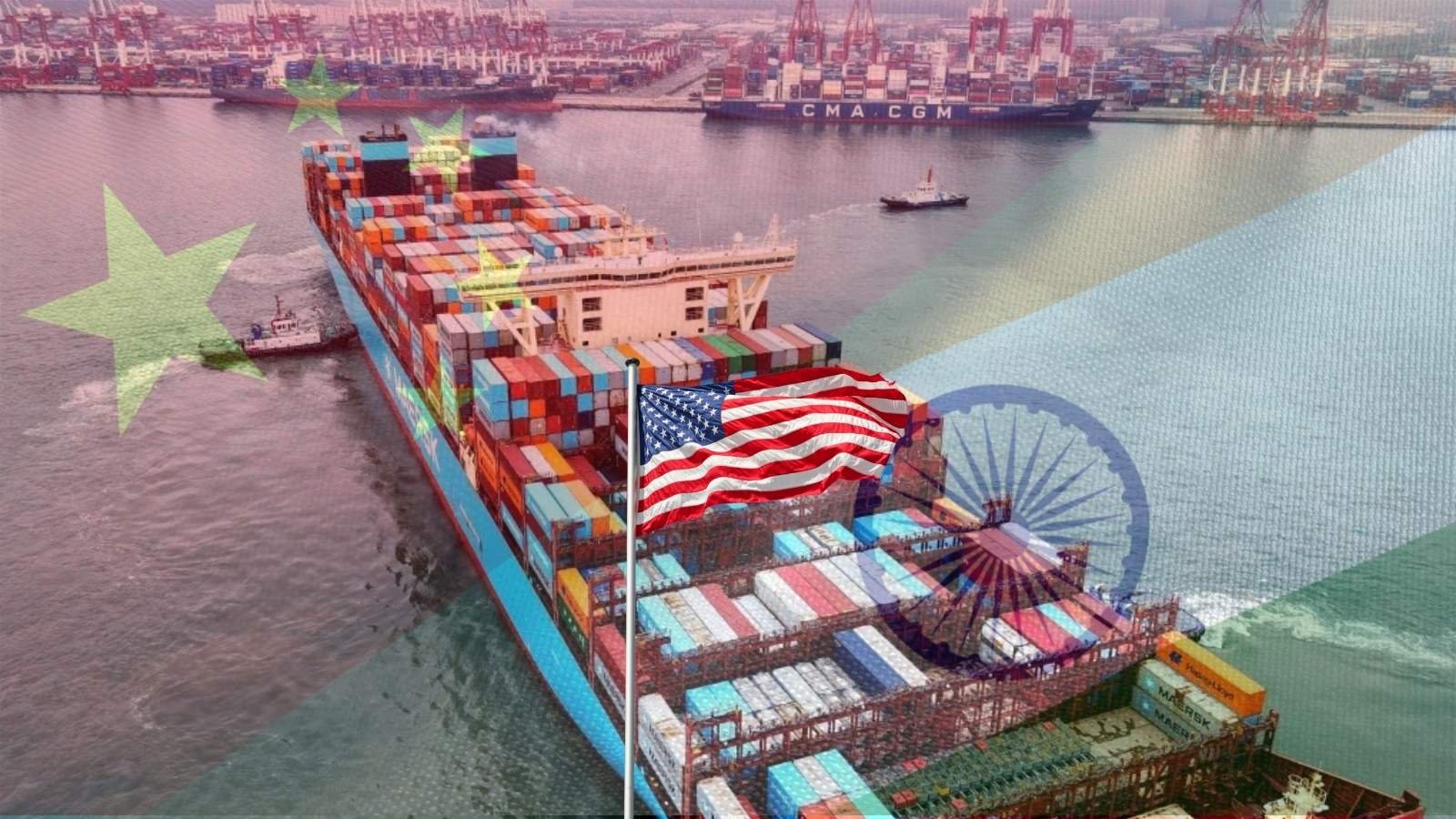
The “Transshipment Scam”: Why the US is Flagging India Over Chinese Tariffs
The White House has released an explosive trade document accusing more than 40 nations, including India, of acting as conduits for Chinese exporters seeking to evade steep American import duties. Titled “The Great Transshipment Scam” and authored by senior trade adviser Peter Navarro, the 25-page report claims a global “shadow transshipment network” is enabling Chinese goods to enter the American market under false countries of origin.
The disclosure comes during a delicate juncture in bilateral commercial relations, as Washington and New Delhi navigate negotiations over bilateral duties, cross-border commerce, and wider supply chain alignment.
The Mechanics of the Alleged Shadow Network
According to the White House findings, the practice accelerated after Washington imposed broad Section 301 tariffs on Chinese imports. To bypass these levies, Chinese manufacturers allegedly route components through third-party jurisdictions. In these transit hubs, products undergo minimal finishing, repackaging, relabeling, or reinvoicing—actions that create the illusion of a non-Chinese origin without achieving true substantial transformation.
India is classified under Tier 1 (“Diversified Scale Leaders”) alongside major U.S. trade partners like Canada, Mexico, Japan, South Korea, and the European Union. The report notes that in Tier 1 nations, transshipment risks are deeply embedded within large, genuine manufacturing sectors, making fraudulent cargo harder to isolate from legitimate export channels.
| Risk Category & Tier | Key Nations Identified | Primary Mechanism Cited by U.S. |
| Tier 1: Diversified Scale Leaders | India, Canada, Mexico, EU, Japan, South Korea, Taiwan | Rerouting inside large-scale industrial manufacturing and existing trade flows |
| Tier 2: Deep Chinese Integration | Vietnam, Thailand, Malaysia, Indonesia, Brazil, Turkey | Minimal assembly or “screwdriver factories” altering origin status |
| Tier 3: Opportunistic Targets | UAE, Singapore, Sri Lanka, Bangladesh, Cambodia, Philippines | Low-barrier free-trade zones used for repackaging and reinvoicing |
Why the Pune-Gujarat-Chennai Corridor is Named
The White House report explicitly singles out India’s Pune–Gujarat–Chennai manufacturing corridor. U.S. trade officials claim this industrial belt absorbs Chinese-made electric motors, pumps, and compressors, which are subsequently shipped to the United States declared as Indian exports.
The report argues that such practices directly undercut American domestic production. Navarro stated that a Chinese pump entering the U.S. masked as Indian origin directly displaces manufacturing jobs in industrial hubs like Cincinnati, Dayton, and Columbus, Ohio. American economic models cited in the study estimate that global illegal transshipment causes $19 billion to $26 billion in lost tariff revenues annually for the U.S. treasury.
The Indian Rebuttal: “Big Allegations, Little Evidence”
However, trade experts in New Delhi are pushing back against these sweeping allegations. The New Delhi-based Global Trade Research Initiative (GTRI) categorized the White House document as a report containing “big allegations, little evidence”.
GTRI founder Ajay Srivastava pointed out that the U.S. report broadens the technical definition of transshipment to include legitimate assembly, testing, and component integration. In doing so, it risks conflating genuine Indian manufacturing and global supply-chain production with origin fraud without establishing any actual legal violations.
Furthermore, GTRI’s analysis shows that India already possesses massive domestic manufacturing capability in the targeted sectors. For instance, during FY2026, India exported liquid pumps and gas compressors worth billions globally. Because India is a global export leader in its own right, the assumption that U.S.-bound shipments are merely re-routed Chinese goods is highly flawed.
While India continues to scale up its own domestic infrastructure—ranging from advanced engineering innovation to expanding railway manufacturing and exports—U.S. regulators maintain that strict rules of origin must be enforced across all global supply chains.
AI Tracking and Retroactive Penalties
To counter transshipment schemes, Washington announced immediate enforcement directives. U.S. Customs and Border Protection will deploy an artificial intelligence screening system named “Detective Border”. This platform analyzes historical routing data, factory output limits, and shipping manifests to detect origin fraud before cargo arrives at U.S. ports.
Additionally, the U.S. plans to embed strict anti-transshipment clauses into all active trade negotiations. Companies found guilty of rerouting Chinese goods face severe enforcement measures, including retroactive tariff collection covering the previous 12 months, financial penalties, and the potential loss of preferential access to American markets.
As global supply chains adapt to evolving environmental requirements and industrial growth standards, this latest White House report underscores growing scrutiny over how foreign manufacturing hubs interact with Chinese intermediate goods.
